Truck Accidents on the I-15 in Barstow
Why Barstow is Southern California's most dangerous truck corridor: I-15 and I-40 convergence, FMCSA fatigue violations, CHP Barstow crash reports, and how logistics hub crashes are valued.
- By
- Victorville PI Resource Editorial Team
- Published
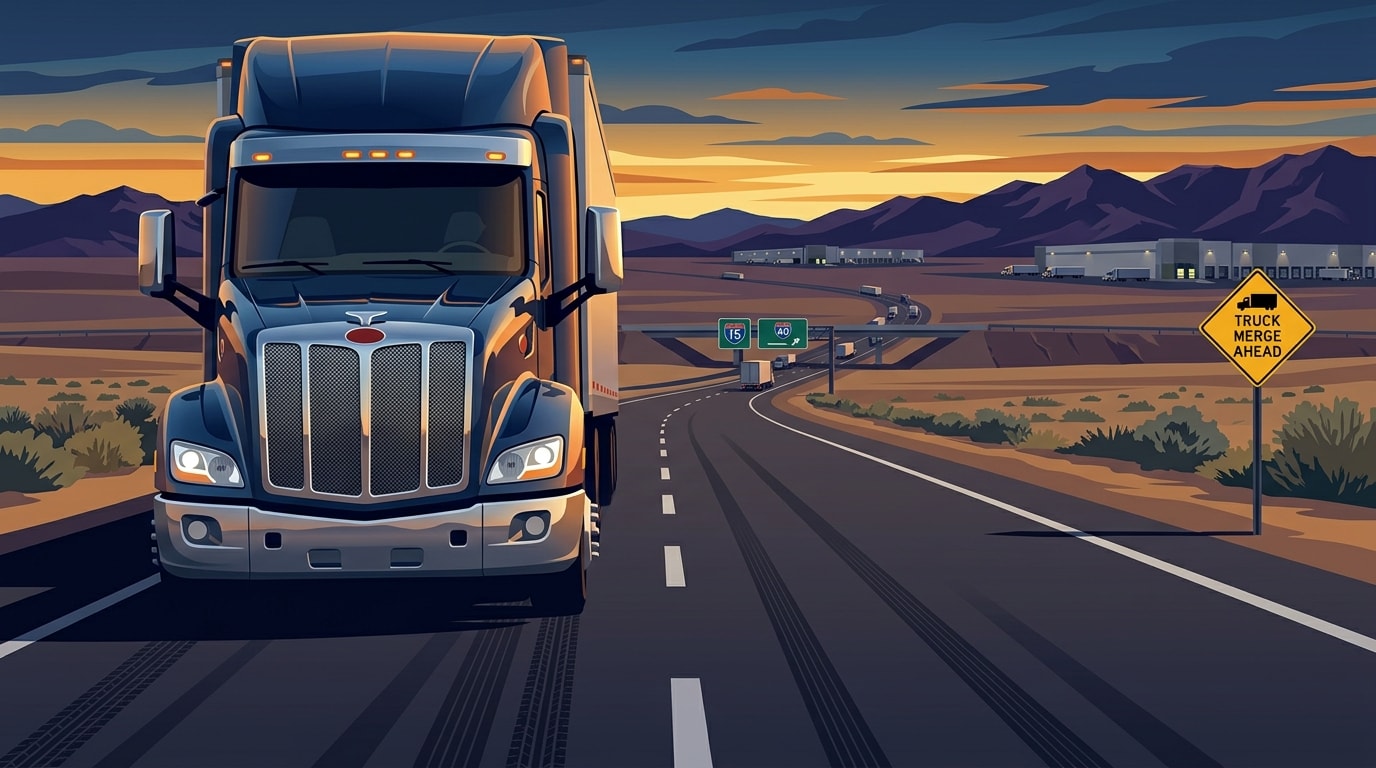
Barstow sits at the exact point where Interstate 15 and Interstate 40 converge in the Mojave Desert — making it one of the most concentrated commercial trucking corridors in the United States. Every semi-truck moving freight between the Ports of Los Angeles and Long Beach, the Inland Empire distribution centers, Las Vegas, and the cross-country I-40 network passes through Barstow. The result is a relentless flow of 80,000-pound commercial vehicles sharing the road with passenger cars on long, monotonous desert stretches where driver fatigue, extreme heat, and high speeds create conditions for catastrophic collisions. This guide is general legal information, not legal advice.
Why Barstow is the most dangerous truck corridor in Southern California
The sheer volume of commercial truck traffic through Barstow distinguishes it from every other corridor in the region. While Victorville and Hesperia see heavy I-15 truck traffic, Barstow is where the traffic doubles — northbound I-15 freight combines with eastbound and westbound I-40 freight at a single interchange.
This convergence creates specific, predictable crash patterns. Merging conflicts between I-15 and I-40 traffic produce sideswipe and lane-change collisions between trucks and passenger vehicles. Speed differentials between fully loaded trucks climbing grades and passenger vehicles moving at freeway speeds create rear-end collision risks. And the sheer density of commercial vehicles means that any single accident can cascade into a multi-vehicle pileup involving multiple trucks and multiple insurance carriers.
The desert environment intensifies every risk factor. Extreme ambient temperatures cause tire blowouts on overheated pavement. High winds — common in the Mojave — push high-profile trailers into adjacent lanes. And the long, flat, featureless stretches of highway east of Barstow are among the most fatiguing driving environments in the country.
How I-15 and I-40 convergence creates catastrophic crash conditions
The I-15/I-40 interchange at Barstow is an engineering bottleneck that forces massive volumes of commercial traffic through a confined transition zone. Trucks exiting I-40 westbound merge onto I-15 southbound toward Los Angeles. Trucks exiting I-15 northbound transition to I-40 eastbound toward Arizona and beyond.
Each of these transitions requires heavy vehicles to change speed, change lanes, and navigate ramp geometries that were designed for lower traffic volumes than the corridor currently handles. Ramp-related collisions — trucks failing to yield, misjudging merge gaps, or overrunning deceleration lanes — are a documented pattern at this interchange.
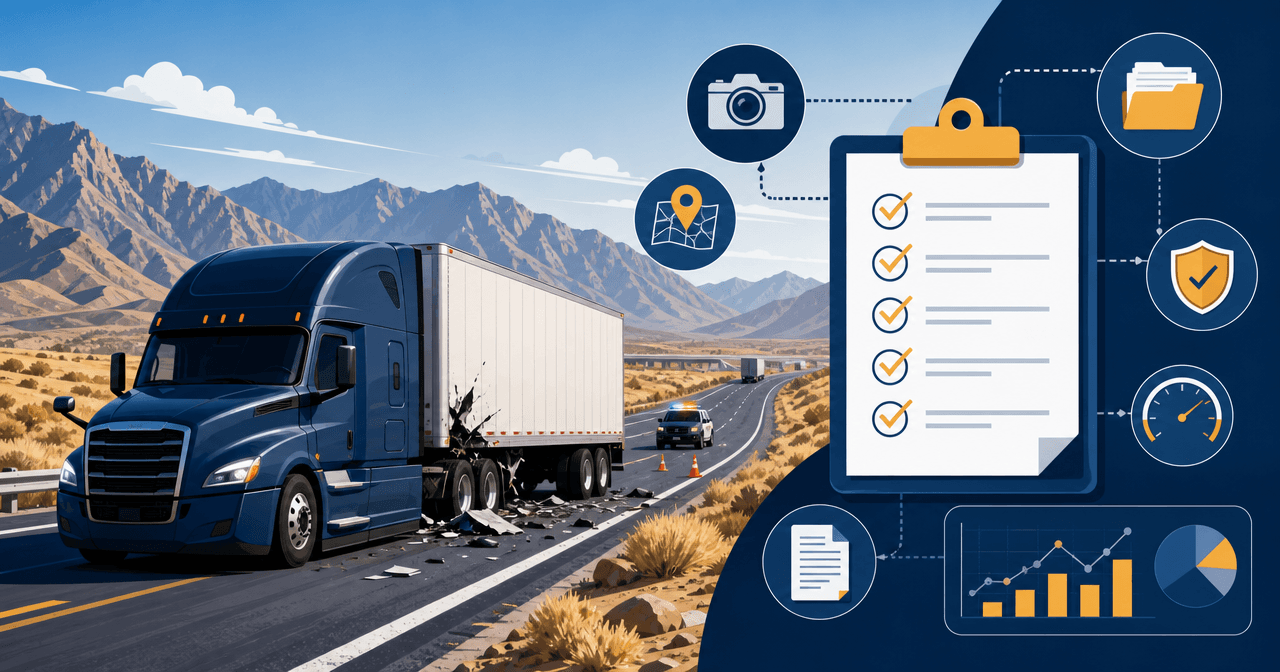
The freight that moves through Barstow includes hazardous materials: fuel tankers, lithium-ion battery shipments, bulk chemicals, and industrial cargo. When a truck carrying hazmat crashes, the collision becomes a multi-agency emergency involving fire suppression, toxic spill containment, extended freeway closures, and hazardous materials teams from San Bernardino County Fire. The cleanup and investigation costs alone can be enormous — and the severity of injuries to nearby motorists increases dramatically when fire or chemical exposure is involved. For understanding what evidence to collect after any truck crash, our guide on what evidence to preserve after a truck accident covers the critical steps.
How FMCSA fatigue violations cause desert truck crashes
The Federal Motor Carrier Safety Administration (FMCSA) regulates the hours a commercial truck driver can operate before mandatory rest periods. Under current Hours-of-Service (HOS) rules, a driver can operate for a maximum of 11 hours within a 14-hour window after 10 consecutive hours off duty.
Barstow sits at the tail end of long hauls from Southern California's ports and distribution centers. Drivers who loaded cargo in San Pedro or Ontario in the morning may be approaching their HOS limits by the time they reach Barstow — and the pressure to push through to Las Vegas or the next truck stop creates a powerful incentive to violate rest requirements.
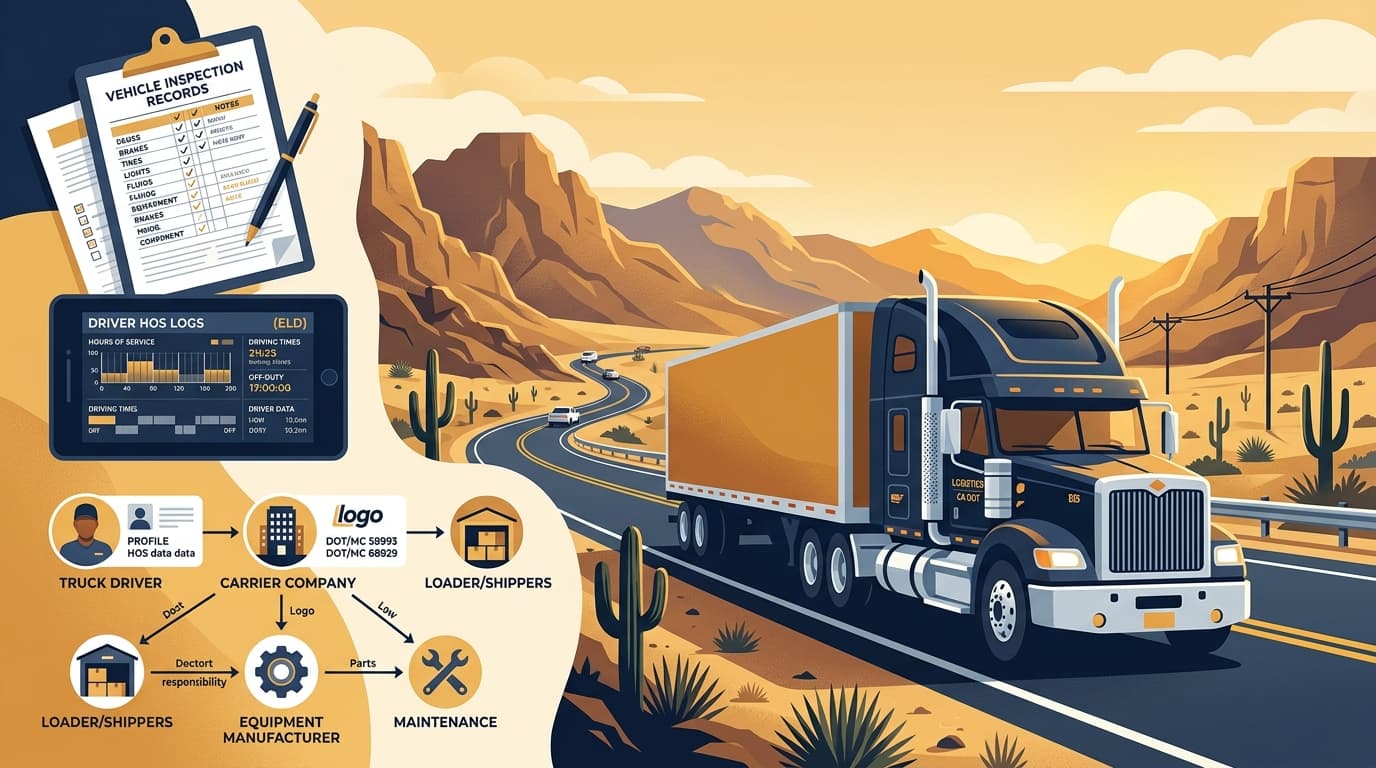
Electronic Logging Devices (ELDs) are required on virtually all commercial trucks and automatically record driving time, rest periods, and vehicle movement. After a crash, the ELD data is critical evidence — it shows whether the driver was within legal hours or had been driving beyond the federal maximum. Investigators from the FMCSA Safety Measurement System (opens in new tab) can also pull a carrier's historical safety record, including prior violations, inspection failures, and crash history. A pattern of violations strengthens your claim against both the driver and the carrier.
The monotony of desert driving compounds fatigue. Long, straight, featureless stretches of highway east of Barstow on I-40 are among the most hypnotic driving environments in the country. A fatigued driver on a monotonous road is a driver whose reaction time has degraded to dangerous levels — and when that driver is operating an 80,000-pound vehicle at 65 mph, the consequences of a delayed reaction are catastrophic.
Getting the CHP crash report and preserving truck accident evidence
Truck accidents on the I-15 and I-40 through Barstow are investigated by the California Highway Patrol (CHP) Barstow office. CHP handles all incidents on state highways and interstates, and their commercial vehicle enforcement units are specifically trained to investigate truck crashes.
A CHP truck accident report typically includes details that a standard passenger vehicle report does not: the truck's DOT number, the carrier's MC number, the driver's commercial driver's license (CDL) status, and observations about the truck's mechanical condition at the scene. These details are essential for identifying all potentially liable parties — the driver, the carrier, the freight broker, the cargo loader, and the maintenance company.
Time is critical in truck accident evidence preservation. Carriers are required to retain ELD data, but they are also motivated to limit their liability. A spoliation letter — a formal demand to preserve all evidence — should be sent to the carrier immediately after the crash. This letter prevents the carrier from legally destroying or overwriting the ELD data, maintenance logs, driver qualification files, and dispatch records that could prove negligence.
How Barstow truck accident claims are valued under California law
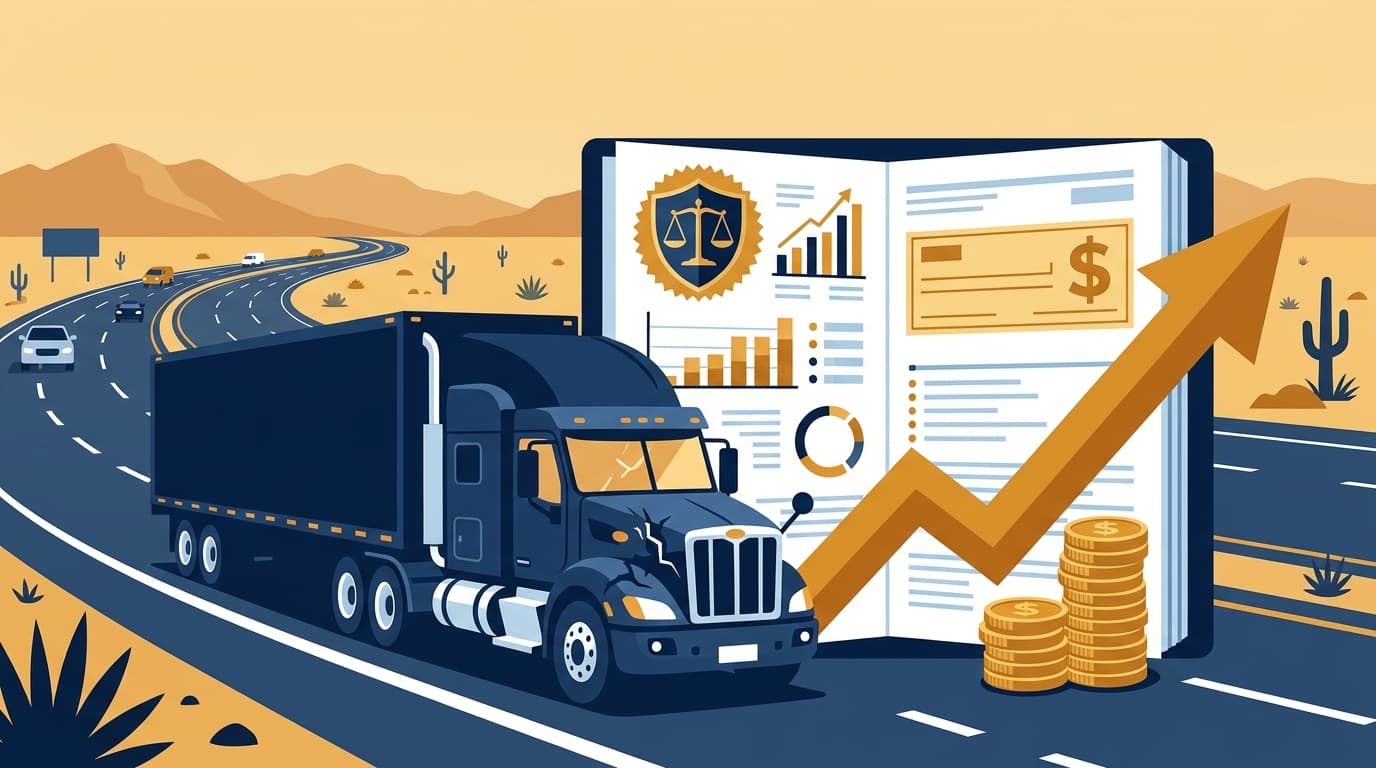
Truck accident claims are fundamentally different from car accident claims because of the insurance involved. FMCSA requires commercial carriers to maintain minimum financial responsibility of $750,000 for general freight, $1,000,000 for oil and non-bulk hazmat, and $5,000,000 for bulk hazmat and explosives. Many carriers voluntarily carry $1M to $5M because shippers and brokers require it.
These higher policy limits mean that truck accident settlements regularly reach six and seven figures — $100,000 to $1,000,000 for significant injuries, and $2,000,000 to $10,000,000 or more for catastrophic cases involving TBI, spinal cord injury, amputation, or death. To understand how truck accident settlement values are calculated in California, our guide explains the multiplier method, the multiple-defendant advantage, and the policy tier structure.
Multiple liable parties is the other critical difference. Unlike a car accident where one at-fault driver carries one policy, a Barstow truck crash can involve the driver (negligence), the carrier (respondeat superior and negligent hiring), the freight broker (negligent carrier selection), the cargo loader (improper loading or weight distribution), and the maintenance company (negligent inspection or repair). Each defendant may carry separate insurance, creating multiple policy pools available to compensate you.
For comprehensive coverage of how California truck accident claims work from the initial crash through resolution, our statewide Pillar guide covers every phase of the process.
This resource is independent and free to use. It is not a law firm and does not provide legal advice. For advice about your specific situation, speak with a qualified attorney.