Average Truck Accident Settlement in California
Why California truck accident settlements far exceed car accidents: FMCSA minimum coverage tiers, catastrophic injuries, multiple liable parties, and realistic value ranges.
- By
- Victorville PI Resource Editorial Team
- Published
When a passenger vehicle collides with a commercial truck, the resulting physical and financial devastation is often overwhelming. Understanding the average truck accident settlement in California requires recognizing that these cases operate under entirely different legal and insurance frameworks than standard auto collisions. Victims and their families face unique challenges when seeking compensation for severe injuries and long-term damages.
Why truck accident settlements are dramatically higher than car accidents
The fundamental difference between commercial and passenger vehicle crashes lies in the underlying insurance requirements and the physics of the collision. A standard auto insurance policy in California requires minimum limits of just $15,000 per person and $30,000 per accident. In stark contrast, a commercial truck policy starts at a mandatory minimum of $750,000.
This mass disparity in insurance coverage is a direct response to the catastrophic force generated in commercial collisions. An 80,000-pound fully loaded tractor-trailer striking a 4,000-pound passenger car inevitably causes exponentially more damage than a typical fender bender. Because the injuries are much more severe, the resulting medical bills are proportionately higher.
Higher economic losses naturally lead to a higher multiplier for non-economic damages, resulting in a dramatically higher settlement overall. While every case is evaluated individually, general ranges for truck accident claims often reflect this severity. Settlements may range from $100,000 to $1,000,000 for significant injuries, while cases involving catastrophic or permanent damage can reach $2,000,000 to $10,000,000 or more.
Commercial insurance minimums: the $750K, $1M, and $5M tiers
Federal regulations establish strict financial responsibility rules for motor carriers operating in interstate commerce. Under 49 CFR § 387.9 (opens in new tab), the Federal Motor Carrier Safety Administration (FMCSA) mandates specific minimum coverage tiers based on the type of freight being transported. Tier 1 requires a baseline of $750,000 in coverage for general freight carriers moving non-hazardous property.
The requirements increase substantially when hazardous materials are introduced. Tier 2 mandates $1,000,000 in coverage for motor carriers transporting oil and specific non-bulk hazardous materials. Tier 3 demands the highest level of protection, requiring $5,000,000 in coverage for carriers hauling bulk hazardous materials and explosives.
Remarkably, these federal minimums have not been updated since 1980, meaning they are often inadequate for fully compensating victims in modern catastrophic injury cases. Despite this regulatory stagnation, many commercial carriers voluntarily carry $1,000,000 to $5,000,000 in coverage because major shippers and freight brokers require it to do business.
How catastrophic injuries push settlements into the millions
The sheer physical trauma inflicted by a commercial truck collision frequently results in permanent, life-altering medical conditions. Common catastrophic injuries include traumatic brain injury (TBI), severe spinal cord damage, traumatic amputation, multiple complex fractures, and severe internal organ damage. These conditions require immediate, intensive emergency care followed by extensive rehabilitation.
The financial burden of these injuries is staggering, with the lifetime medical costs for a severe spinal cord injury easily ranging from $1,000,000 to $5,000,000 or more. Beyond medical expenses, victims often face the total loss of their ability to work in their chosen profession. Lost earning capacity projected across several decades translates into massive economic damages.
Because the physical and emotional impact is permanent, the multiplier used to calculate pain and suffering in truck cases often exceeds four to five times the total economic damages. This compounding effect of lifelong medical needs and permanent disability is the primary driver pushing commercial trucking settlements into the multi-million dollar range.
Multiple liable parties: driver, carrier, broker, cargo loader, manufacturer
Unlike standard car accidents that typically involve a single at-fault driver, commercial trucking cases are incredibly complex. A comprehensive investigation can reveal between four and six different corporate defendants who share liability for the crash. Because each defendant may carry separate commercial insurance policies, identifying all liable parties can access multiple policy pools for compensation.
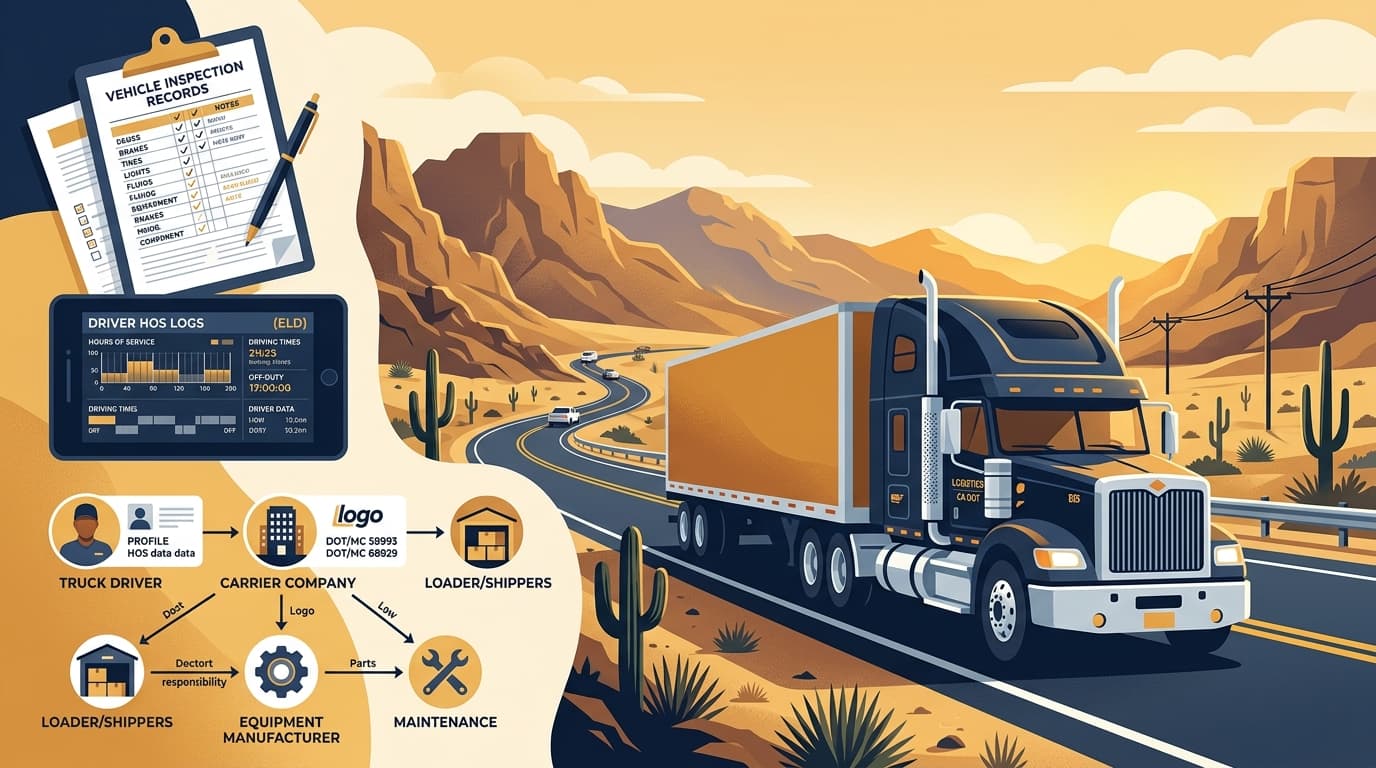
The web of liability extends far beyond the truck driver's initial negligence. The trucking carrier can be held responsible through both the legal doctrine of respondeat superior and direct negligent hiring practices. Additionally, freight brokers might be liable for negligent selection of an unsafe carrier, while independent cargo loaders can face liability for improper loading that caused a rollover.
Further investigation might uncover that a maintenance company performed negligent repair work or that a manufacturer produced defective equipment. Documenting exactly who is responsible requires knowing what evidence to preserve after a truck crash before corporate records disappear or physical evidence is destroyed.
The I-15 logistics corridor and High Desert truck accident patterns
Victorville sits squarely on the I-15 logistics corridor, serving as a critical artery for massive commercial truck traffic flowing between Southern California ports and inland distribution centers. This constant stream of heavy commercial transport creates unique road safety challenges for local residents and highway commuters. The combination of intense traffic volume and challenging geographical features creates a highly dangerous environment.
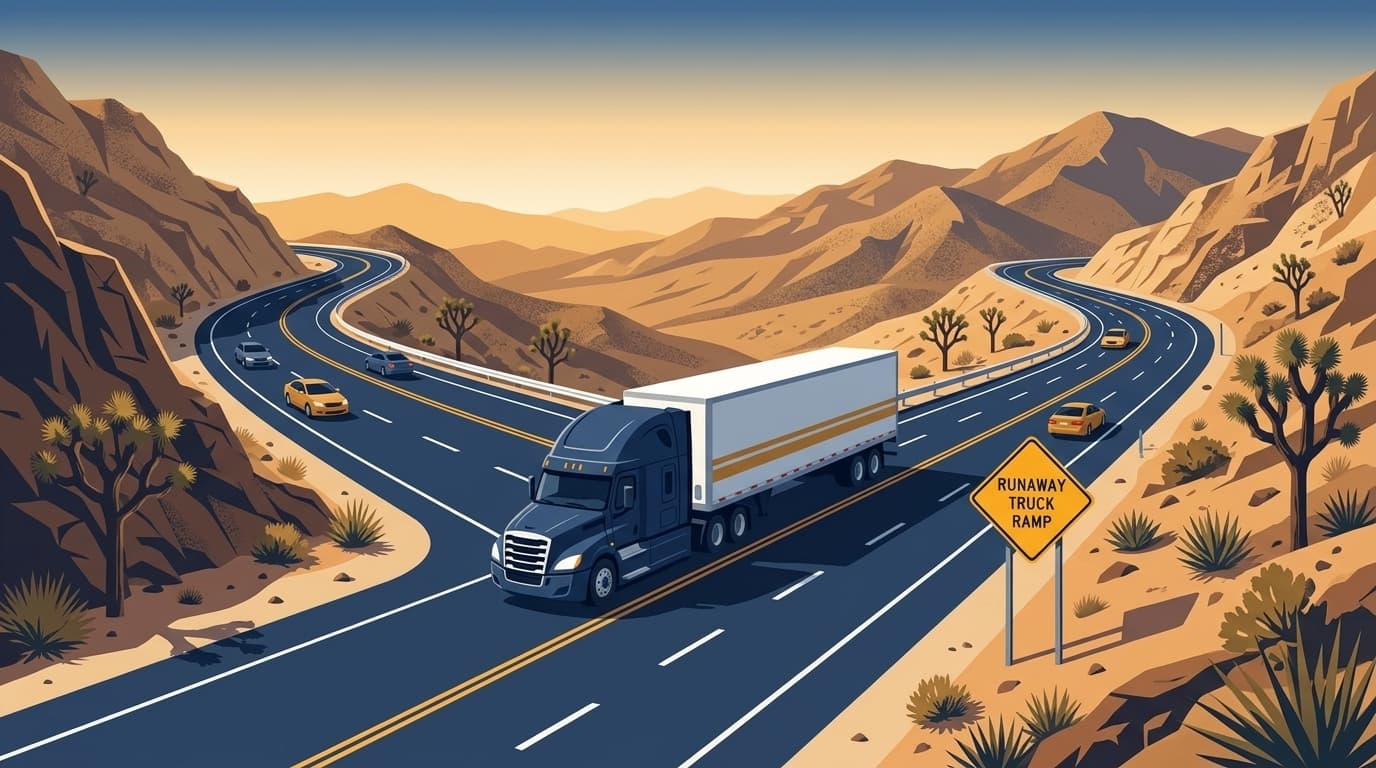
The steep Cajon Pass grade, combined with widespread driver fatigue and excessive speed, creates a predictable recipe for catastrophic truck collisions. Motorists navigating this stretch must contend with heavy trucks struggling to maintain speed uphill or properly brake on steep descents. Understanding how truck accidents unfold on the I-15 through Victorville can help residents recognize and anticipate these local hazards.
Navigating the aftermath of a major commercial collision requires a deep understanding of both state and federal trucking regulations. For comprehensive coverage of how these complex legal concepts apply locally, it helps to learn how California truck accident claims work from the initial crash through resolution.
This resource is independent and free to use. It is not a law firm and does not provide legal advice. For advice about your specific situation, speak with a qualified attorney.