I-15 Commercial Truck Accidents in Victorville
Why commercial truck crashes happen so frequently on the I-15 through Victorville, including Cajon Pass brake failures, crosswinds, and driver fatigue.
- By
- Victorville PI Resource Editorial Team
- Published
Interstate 15 is the main commercial freight artery connecting the ports of Southern California to Las Vegas and the rest of the inland United States. Every day, thousands of big rigs pass through Victorville and the High Desert — and the stretch of highway that includes the Cajon Pass is one of the most crash-prone corridors in the state. This article explains why truck collisions happen here so frequently and what makes them especially dangerous. It is general legal information, not legal advice.
The Cajon Pass: steep grades and brake failure
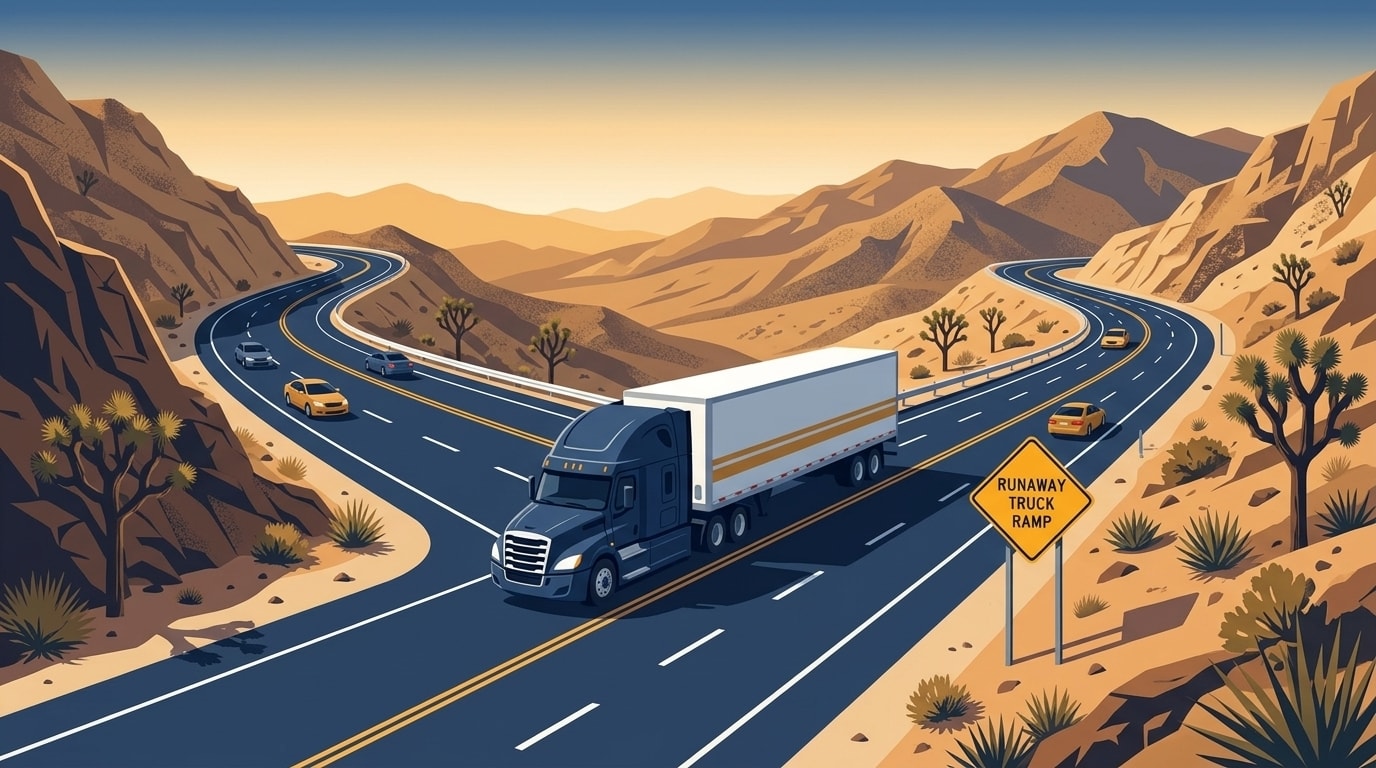
The southbound descent through the Cajon Pass is where many of the most serious truck crashes on I-15 originate. The highway drops roughly 1,160 feet over approximately four miles, with grades reaching about 6 percent — steep enough to overwhelm a truck's braking system if the driver is not in the correct low gear before the descent begins.
When brakes overheat on a long downhill grade, they can fade or fail entirely. Runaway truck ramps exist along the Pass for exactly this reason, but not every driver reaches them in time. The result can be a fully loaded tractor-trailer barreling into slower traffic at the bottom of the grade, often with catastrophic consequences.
High Desert crosswinds
The open, flat terrain surrounding Victorville and the I-15 corridor makes the area prone to strong, unpredictable crosswinds. High-profile vehicles — particularly empty or lightly loaded trailers — are especially vulnerable.
A sustained crosswind gust can push a trailer sideways, causing the driver to overcorrect, or tip the entire rig onto its side. Wind-related truck rollovers on the I-15 and surrounding High Desert highways are a recurring hazard that local commuters are all too familiar with, especially during seasonal wind events.
Driver fatigue on long-haul routes
The I-15 between Los Angeles and Las Vegas is one of the busiest long-haul freight corridors in the western United States. Drivers hauling cargo between the ports and inland distribution centers often face tight delivery schedules, overnight shifts, and hundreds of miles of monotonous desert highway.
Federal hours-of-service regulations under 49 CFR Part 395 (opens in new tab) limit how long a commercial driver may operate before taking a mandatory rest break. But fatigue is difficult to regulate perfectly, and violations — whether from pressure to meet delivery windows or from falsified logs — remain a significant factor in commercial truck crashes nationwide.
Why truck crashes cause more severe injuries
A fully loaded commercial truck can weigh up to 80,000 pounds under federal gross vehicle weight limits. A typical passenger car weighs roughly 3,500 to 4,500 pounds. That weight difference is the core reason truck collisions tend to produce far more serious injuries than car-on-car crashes.
- Stopping distance — a loaded truck traveling at highway speed needs significantly more distance to stop than a passenger vehicle.
- Override and underride — a smaller vehicle can be crushed beneath a trailer in a rear-end or side collision.
- Cargo hazards — hazardous materials, unsecured loads, or fuel spills can create secondary dangers after the initial impact.
Understanding how commercial truck accident claims work is important because the severity of these collisions often involves multiple liable parties, complex federal regulations, and much higher stakes.
Protecting yourself after a truck crash
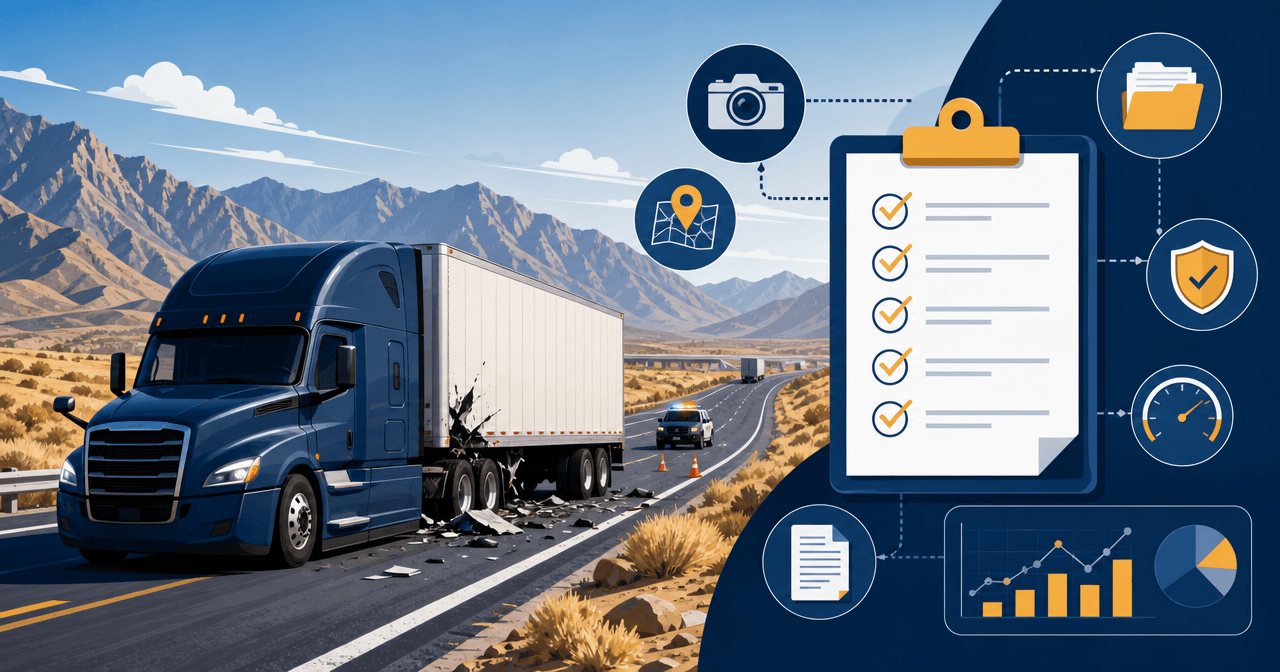
If you or someone you know is involved in a collision with a commercial truck on the I-15 or anywhere in the High Desert, the steps you take immediately afterward can make a significant difference. Truck accident evidence — including electronic logging data, onboard recorder information, and carrier maintenance records — can be overwritten or destroyed quickly.
Knowing what evidence to preserve after a truck crash is one of the most important things you can do to protect a potential claim. A prompt free consultation can help ensure that critical records are secured before they disappear.
This resource is independent and free to use. It is not a law firm and does not provide legal advice. For advice about your specific situation, speak with a qualified attorney.