How Much Is a Slip and Fall Claim Worth in California?
California slip and fall claim values explained: how the notice requirement affects settlements, orthopedic injury costs, commercial vs. residential liability, and realistic ranges.
- By
- Victorville PI Resource Editorial Team
- Published

Evaluating the financial compensation for a slip and fall injury in California requires analyzing specific legal thresholds and medical evidence. Unlike other types of personal injury cases, establishing liability in these incidents hinges on demonstrating what a property owner knew and when they knew it. The resulting financial recoveries can range widely depending on the strength of this liability evidence and the severity of the sustained injuries.
Why slip and fall claims are harder to win — and how notice makes the difference
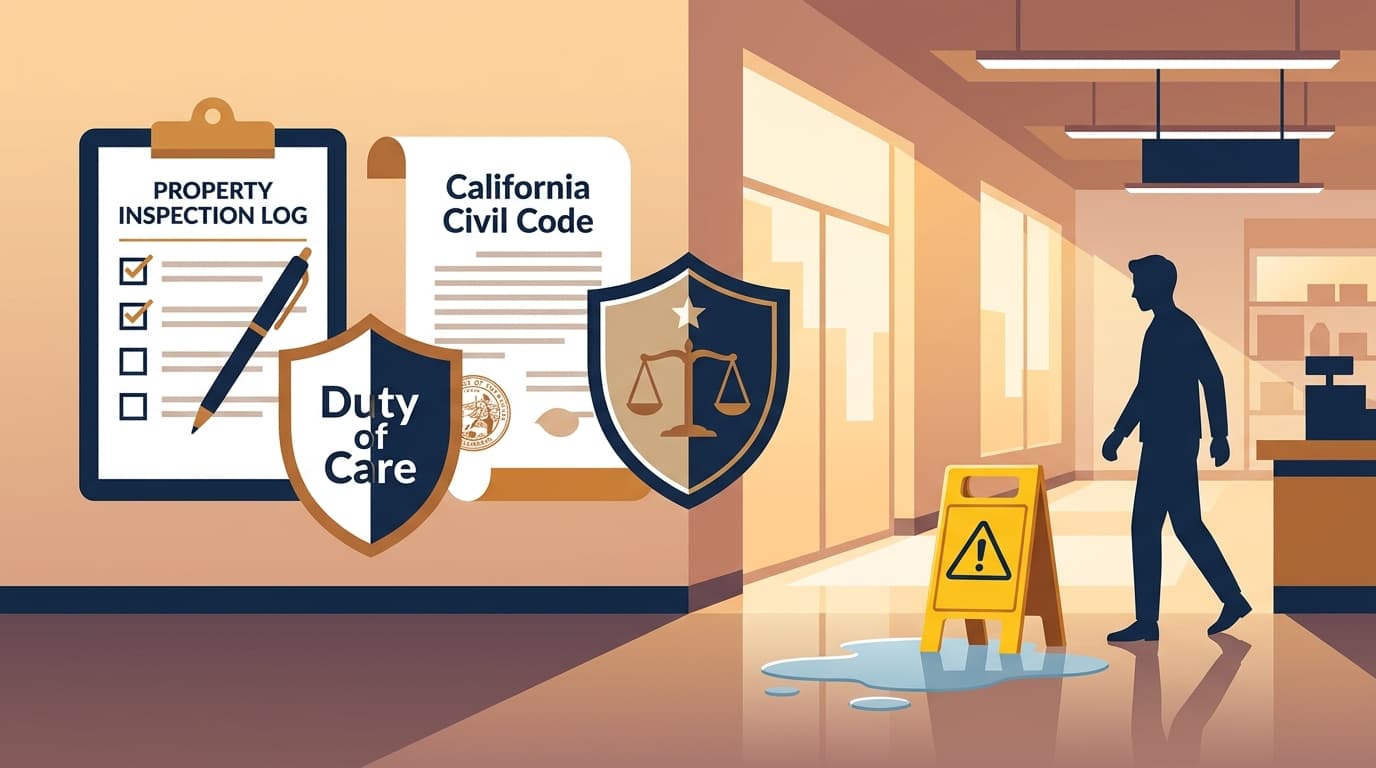
Slip and fall claims typically experience lower success rates than standard vehicle accident claims. The fundamental reason for this disparity is the notice requirement, which places a specific evidentiary burden on the injured party. The victim must conclusively prove the property owner knew or should have known about the dangerous condition before the accident occurred.
Unlike strict liability rules that apply to dog bites or clear traffic violations in vehicle crashes, premises liability demands proof of negligence regarding hazard management. There are two distinct types of notice in California law that dictate claim viability. Actual notice means the owner was directly informed about the spill, while constructive notice applies when the hazard existed long enough that they should have discovered it.
This essential evidentiary burden is precisely what makes these cases complex and determines whether a claim has substantial value. When liability is clearly established, settlement ranges vary wildly based on the circumstances. Cases might resolve for $15,000 to $50,000 for minor injuries with clear liability, while claims involving severe orthopedic injuries and robust evidence can range from $200,000 to $500,000 or more.
How the notice requirement affects the settlement value
The quality of evidence regarding property owner notice directly correlates to the final settlement value. Strong notice evidence typically translates to stronger settlement offers from insurance carriers. Compelling proof often includes surveillance footage showing a spill remained unaddressed for 30 or more minutes, detailed written maintenance logs revealing neglected routines, or records of prior complaints.
Conversely, weak notice evidence frequently leads to reduced claim values or outright denials. If a liquid spill occurred mere moments before the fall, with no witnesses and no camera footage, the property owner may successfully argue they lacked a reasonable opportunity to correct the hazard. This scenario illustrates why constructive notice relies heavily on the "time on floor" analysis.
The longer a dangerous condition existed without cleanup or warning signs, the more viable the claim becomes. Gathering independent context is helpful; you can review CDC data on fall injuries and prevention (opens in new tab) across various environments. Because crucial evidence disappears quickly, securing official incident reports before leaving a store is a vital step in preserving claim value.
High-cost orthopedic injuries from slip and fall accidents
The physical mechanics of an unexpected fall often result in severe structural damage to the body. Hip fractures are particularly devastating, routinely requiring $30,000 to $60,000 for surgical intervention alongside months of intensive rehabilitation. For elderly victims, these injuries frequently precipitate life-threatening secondary complications that dramatically increase necessary medical care.
Knee injuries represent another frequent and costly consequence of slipping accidents. Treating a torn meniscus, an ACL rupture, or requiring a full knee replacement typically generates medical expenses ranging from $20,000 to well over $100,000. Similarly, spinal compression fractures are common in older adults, leading to chronic pain, loss of overall height, and permanent postural changes like kyphosis.
Victims frequently attempt to brace themselves during a fall, resulting in FOOSH injuries (Fall On Outstretched Hand). These upper extremity traumas often cause complex wrist and arm fractures that necessitate surgical pinning, sometimes leading to a permanent reduction in grip strength. In claims involving such intensive orthopedic surgery and extended rehabilitation, the multiplier applied to medical damages typically reaches three to four times the base costs.
Commercial properties vs. residential: different standards, different settlements
The classification of the property where the injury occurred significantly influences the legal standards and available compensation. Commercial properties, such as retail stores, malls, and restaurants, are held to a much higher standard of care. These businesses are expected to maintain regular inspection schedules, deploy proper safety equipment, and enforce strict maintenance protocols.
Because of this heightened responsibility and increased foot traffic, commercial entities typically carry much larger insurance limits. Most commercial general liability policies provide $1,000,000 to $5,000,000 in coverage per occurrence. You can read more about common injuries in retail environments to understand standard hazard scenarios that trigger these policies. Major big-box retailers deploy sophisticated legal defense teams to protect these deep insurance pools.
In contrast, residential properties operate under a somewhat lower duty of care standard regarding regular hazard inspections. These claims are usually filed against standard homeowner's insurance policies, which typically feature limits between $100,000 and $300,000. While property owners still must warn guests of known hidden dangers, the expectation for continuous monitoring is significantly less stringent than in a commercial setting.
Victorville retail environments and local claim patterns
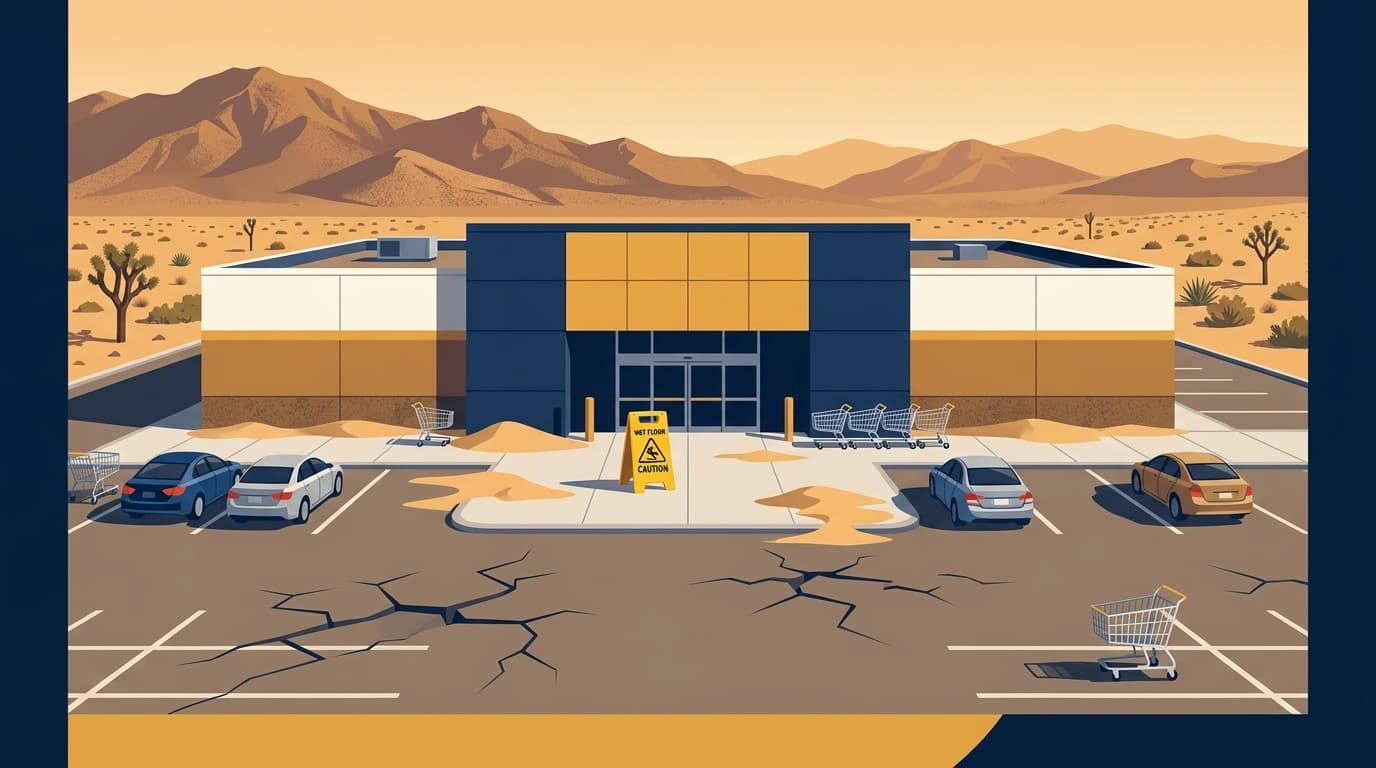
The commercial landscape of the High Desert presents unique premises liability challenges. Victorville's prominent shopping centers and sprawling big-box retail corridors along Bear Valley Road and Palmdale Road see immense daily foot traffic. This dense concentration of retail activity inevitably leads to elevated incidents of customer injuries when safety protocols are relaxed.
The local desert climate also contributes to specific hazard patterns inside these commercial stores. High foot traffic combined with extreme desert heat often brings tracked-in sand, condensation near refrigeration units, and uneven parking lot transitions that create significant slip risks. Learn more about hazards in Victorville retail settings for specific local examples.
Navigating the complexities of these injury claims requires a thorough understanding of state laws and local environmental factors. For comprehensive coverage of state-wide premises liability laws and how different hazard types are legally analyzed, review how California premises liability claims are evaluated.
This resource is independent and free to use. It is not a law firm and does not provide legal advice. For advice about your specific situation, speak with a qualified attorney.