Will My Personal Injury Case Go to Trial in California?
Why 95%+ of California personal injury cases settle out of court: the difference between filing a lawsuit and going to trial, mediation, and Mandatory Settlement Conferences in San Bernardino County.
- By
- Victorville PI Resource Editorial Team
- Published

The word "trial" terrifies most personal injury victims. They picture standing in front of a judge and jury, answering aggressive questions from a defense attorney, and risking everything on a verdict they cannot predict. This fear is so powerful that it drives victims to accept lowball settlement offers just to avoid the possibility of a courtroom — which is exactly what the insurance company is counting on. The reality is far less frightening: approximately 95 percent of personal injury cases in California settle entirely out of court, and most of the remaining cases resolve through structured alternative processes long before a jury is ever selected. This guide is general legal information, not legal advice.
The number that should reassure you: 95% of cases never see a jury
This statistic is not an estimate or an aspiration. It reflects the actual resolution pattern of personal injury cases in California's court system. The overwhelming majority of cases — roughly 95 to 96 percent — are resolved through settlement negotiations, mediation, or court-supervised conferences without ever reaching a trial verdict.
The reason is straightforward: trials are expensive, unpredictable, and time-consuming for both sides. The insurance company must pay defense attorneys, expert witnesses, and litigation costs that can easily reach tens of thousands of dollars. The plaintiff faces the risk of a verdict that could be lower than the settlement offer — or a defense verdict that results in no compensation at all.
Both sides have strong financial incentives to reach a negotiated resolution. The insurance company prefers the certainty of a known settlement amount over the unpredictability of a jury. The plaintiff prefers the guarantee of money in hand over the risk of an adverse verdict. This mutual interest in certainty is what drives the overwhelming majority of cases to settle.
Filing a lawsuit is not the same as going to trial
This is the distinction that most victims do not understand — and it is the distinction that the insurance company exploits to keep you afraid.
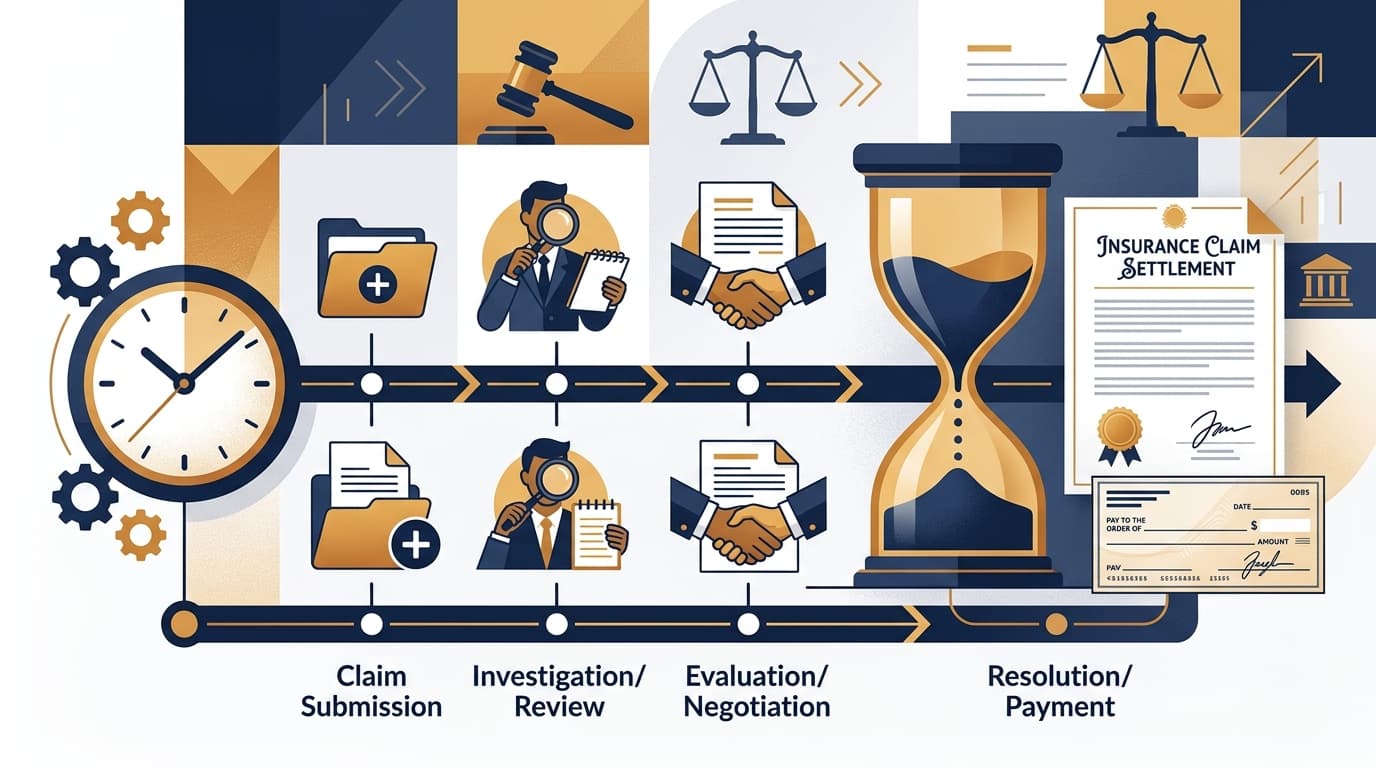
Filing a lawsuit initiates the formal litigation process. It means your attorney files a complaint with the court, the defendant is served, and the case enters the judicial system. But filing a lawsuit does not mean you will sit in a courtroom in front of a jury. It means the case has moved from informal negotiation to a structured legal process — a process that includes multiple opportunities to settle before trial ever becomes a possibility.
After a lawsuit is filed, the case enters the discovery phase. Both sides exchange documents, answer written questions (interrogatories), and conduct depositions — recorded interviews under oath. Discovery typically takes three to twelve months. During this period, both sides develop a clearer picture of the evidence, which often narrows the gap between their positions and creates new opportunities for settlement.
Many cases settle during or immediately after discovery, because the evidence uncovered during this process forces the insurance company to confront the true strength of the plaintiff's case. The insurer's risk calculation changes — and the settlement offer increases accordingly. For a detailed look at how long the entire process takes from start to finish, our timeline guide provides phase-by-phase estimates.
How mediation resolves cases without a courtroom
Mediation is a voluntary, confidential process where a neutral third party — the mediator — helps both sides negotiate a resolution. The mediator does not make a decision or impose a ruling. They facilitate communication, identify areas of agreement, and help bridge the gap between the parties' positions.
A typical mediation session works like this: both sides arrive at a neutral location (often the mediator's office). After opening statements, the parties separate into private rooms. The mediator moves between the rooms, carrying offers, counteroffers, and information. The process is designed to help both sides understand the other's perspective and find a number that both can accept.
Mediation is effective because it introduces a trusted neutral voice into a negotiation that has often become adversarial. The mediator can say things to the insurance company's representative that would sound different coming from the plaintiff's attorney — and vice versa. Many cases that appear hopelessly stalled in direct negotiation are resolved in a single mediation session.
What happens at a Mandatory Settlement Conference in San Bernardino County
If mediation does not resolve the case — or if the parties choose not to mediate — the court itself intervenes through a Mandatory Settlement Conference (MSC). In San Bernardino County, where Victorville personal injury cases are litigated, the MSC is a critical step that occurs after discovery is complete but before the trial date.
At an MSC, all parties with settlement authority must be present. This includes the plaintiff, the defense attorney, and — critically — a representative from the insurance company who has the authority to approve a settlement. A judicial officer (often a judge or a settlement officer) evaluates the strengths and weaknesses of each side's case and provides a candid assessment of the likely outcome at trial.
The judicial officer's assessment carries significant weight because it previews what a jury might decide. If the judge tells the insurance company's representative that the plaintiff's case is strong and a jury is likely to award $200,000, the insurer must weigh that assessment against the cost and risk of proceeding to trial. San Bernardino County courts take MSCs seriously and dedicate significant judicial resources to facilitating resolution — the court system benefits when cases settle because it frees trial capacity for cases that genuinely need jury determination.
When trial actually becomes necessary — and why it can work in your favor
In the small percentage of cases that do reach trial, there is usually a specific reason: the insurance company has unreasonably low-valued the claim, liability is genuinely disputed, or the damages are so severe that the gap between the demand and the offer cannot be bridged through negotiation.
Trial is not something to fear — it is the ultimate leverage in the negotiation process. The entire settlement process exists in the shadow of trial. Every offer the insurance company makes is calculated against the risk of what a jury might award. When the insurance company knows that your attorney is prepared to try the case — and has done so before — their offers reflect that reality.
If you accept a lowball offer because you are afraid of trial, the insurance company wins. If you are prepared to go to trial — even though you will almost certainly settle before getting there — the insurance company's risk calculation shifts in your favor. An experienced attorney does not want to go to trial unnecessarily, but they are prepared to do so — and that preparation is what drives fair settlements. For a deeper understanding of the tactics adjusters use to exploit this fear, our guide reveals the full playbook.
A Victorville personal injury lawyer familiar with San Bernardino County's court system, its judicial officers, and its settlement conference procedures brings an informed perspective to every stage of the process — from the first demand letter to the MSC and, if necessary, through trial.
This resource is independent and free to use. It is not a law firm and does not provide legal advice. For advice about your specific situation, speak with a qualified attorney.