What Is a Personal Injury Demand Letter in California?
The anatomy of a California personal injury demand letter: Statement of Facts, Medical Timeline, Special Damages Calculation, and why a law firm letterhead changes the insurer's risk calculation.
- By
- Victorville PI Resource Editorial Team
- Published
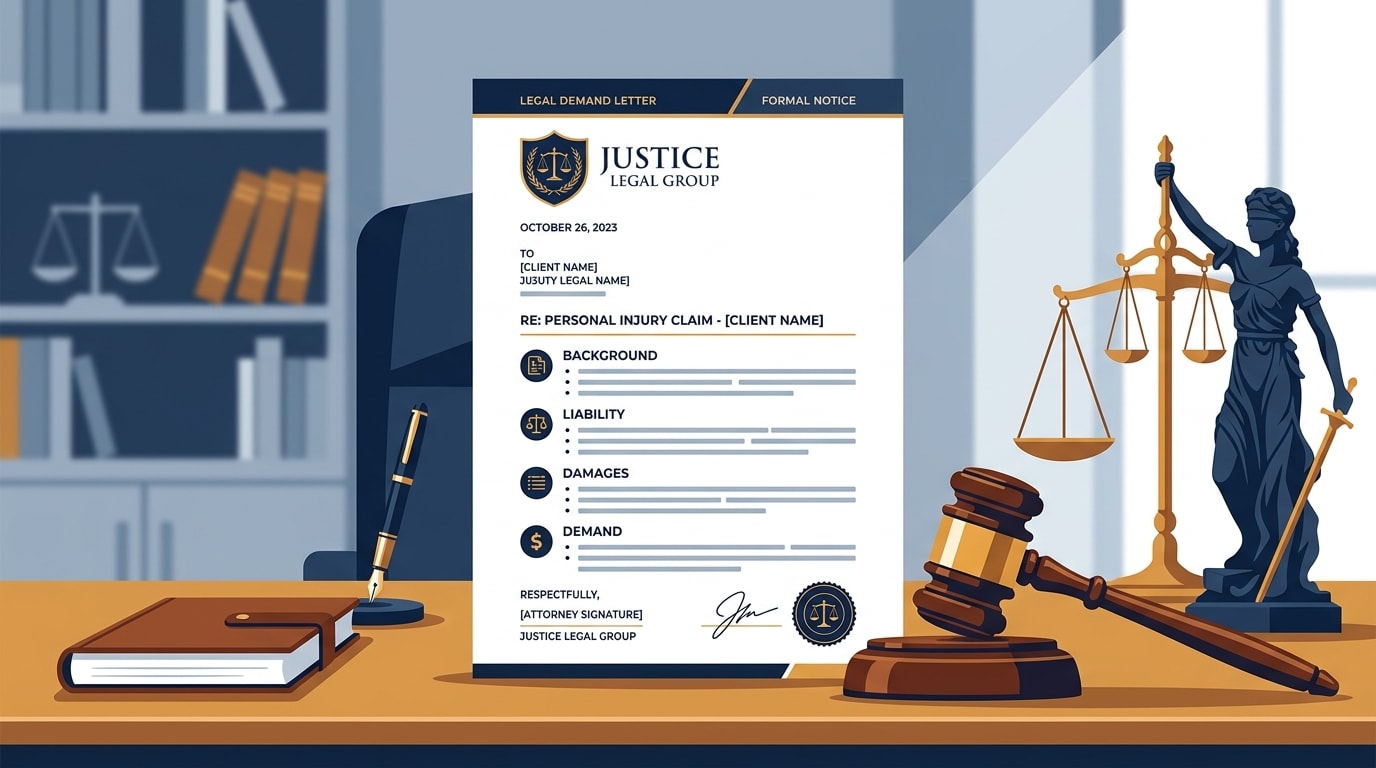
Most people who are injured in an accident have no idea how the formal negotiation process with the insurance company actually begins. They assume the adjuster will eventually make a fair offer based on their medical bills. In reality, the negotiation starts when one side sends a formal document that lays out the case in precise financial terms. That document is the personal injury demand letter — and its quality, specificity, and source determine whether the insurance company treats the claim seriously or tries to settle it for pennies. This guide explains what a demand letter is, what goes into it, and why it matters. It is general legal information, not legal advice.
What a demand letter is and why it starts the real negotiation
A demand letter is a formal written document sent to the at-fault party's insurance company that presents the injured person's case and demands a specific dollar amount to resolve the claim. It is not a lawsuit. It is not a court filing. It is the opening move in a structured negotiation process.
Before the demand letter is sent, the insurance company controls the pace and direction of the claim. The adjuster requests records, asks questions, and makes offers on their timeline. The demand letter reverses that dynamic. It presents the claimant's case in a professional, organized format that forces the adjuster to respond — and it puts a specific number on the table that anchors the negotiation.
The demand letter also triggers a critical internal process within the insurance company: the reserve allocation. When the adjuster receives a demand, they must update the internal file with an estimate of what the claim will likely cost the company. A strong, well-documented demand letter justifies a higher reserve — and a higher reserve gives the adjuster authority to offer a higher settlement.
The four essential sections of a professional demand letter
A professional demand letter follows a precise structure. Each section serves a specific purpose in building the case and justifying the demand amount.
The Statement of Facts is a clear, chronological narrative of the accident. It establishes liability by explaining exactly what the at-fault party did wrong — whether they ran a red light, rear-ended the victim at a stop, or failed to yield at an intersection. This section is supported by the police report, witness statements, photographs, and any available video evidence.
The Medical Treatment Timeline documents the full scope of the victim's medical journey from the day of the accident through maximum medical improvement. It includes emergency room visits, diagnostic imaging, specialist referrals, surgeries, physical therapy sessions, prescription medications, and any ongoing treatment. This section tells the story of the injury — not as a list of billing codes, but as a narrative of suffering, recovery, and permanent limitation.
The Special Damages Calculation itemizes every economic loss with exact dollar amounts. Medical bills are listed individually — each provider, each date, each amount. Lost wages are calculated from pay stubs and employer verification letters. Out-of-pocket expenses — prescriptions, medical equipment, mileage to appointments — are documented with receipts. This section leaves no ambiguity about the financial impact of the injury.
The General Damages and Policy Limits Demand applies the multiplier to the total special damages to estimate pain and suffering, then presents the final demand amount. For context on how this formula works across different injury types, our guide on what determines the average personal injury settlement in California explains the multiplier method in detail. In cases where damages clearly exceed the available coverage, a CCP § 999 time-limited policy limits demand (opens in new tab) may be sent, requiring the insurer to respond within 30 to 33 days.
How the demand amount is calculated using the damages formula
The demand amount is not pulled from thin air. It follows the same Special Damages + General Damages formula used to value every personal injury claim in California.
Special damages are totaled first: all medical bills (past and projected future), all lost wages (past and projected future lost earning capacity), and all out-of-pocket expenses. These figures are objectively verifiable and supported by documentation.
General damages are then estimated by multiplying the total special damages by a factor that reflects the severity and permanence of the injury. A soft tissue injury with full recovery might justify a multiplier of 1.5 to 2.0. A fracture requiring surgery might justify 2.5 to 3.5. A permanent impairment, TBI, or disfigurement might justify 4.0 to 5.0 or higher.
The final demand amount typically exceeds the target settlement to leave room for negotiation. If the calculated fair value is $150,000, the demand might be sent at $200,000 or higher — establishing an anchor point that shapes the negotiation range. Understanding the deadlines for filing a personal injury claim is essential because the demand letter must be sent with enough time remaining to file a lawsuit if the negotiation fails.
Why a demand on a law firm's letterhead changes the insurer's risk calculation
There is a measurable difference in how insurance companies respond to a demand letter written by an unrepresented victim versus one sent on a law firm's letterhead. The content may be similar, but the insurer's internal response is fundamentally different.
When an unrepresented claimant sends a demand, the adjuster evaluates the probability that the person will actually file a lawsuit if the demand is rejected. In most cases, the adjuster concludes that the claimant will not — they do not know how to file, they cannot afford a lawyer, and they will eventually accept a lower offer out of frustration or financial pressure.
When a Victorville personal injury lawyer sends the same demand, the calculation changes entirely. The adjuster now knows that the claim is being handled by someone who files lawsuits routinely, who understands the discovery process, and who will not accept a lowball offer. The reserve is increased. The settlement authority is expanded. The adjuster's supervisor reviews the file. The risk of going to trial — with its associated defense costs, unpredictable jury outcomes, and potential for a verdict exceeding the settlement offer — becomes real.
What happens after the demand letter is sent
The insurance company is not required to accept the demand. In most cases, they will respond with a counteroffer that is significantly lower than the demand amount. This is expected and is part of the negotiation process.
The response typically arrives within 30 to 60 days, though some insurers take longer. The adjuster may request additional documentation, challenge specific medical expenses, or dispute certain elements of the liability narrative. Each of these responses creates an opportunity to strengthen the case by providing additional evidence.
The back-and-forth negotiation continues until either the parties reach an agreement or the negotiations stall. If negotiations fail, the next step is filing a lawsuit — which initiates the formal litigation process including discovery, depositions, and potentially mediation or trial. Approximately 95% of California personal injury cases settle before reaching trial, often because the act of filing the lawsuit signals that the claimant is serious about pursuing the full value of the case.
This resource is independent and free to use. It is not a law firm and does not provide legal advice. For advice about your specific situation, speak with a qualified attorney.