How Long Does an Insurance Claim Take to Settle in California?
Realistic timelines for California insurance claim settlements: Maximum Medical Improvement, the treatment phase, demand and negotiation, litigation, and why settling too fast costs money.
- By
- Victorville PI Resource Editorial Team
- Published

If you are waiting for an insurance claim to settle, you are almost certainly frustrated. The bills are arriving, the lost wages are accumulating, and the insurance company seems to be in no hurry. The temptation to accept whatever offer comes next — just to make it stop — is overwhelming. But that temptation is exactly what the insurance company is counting on. Understanding the realistic timeline of a personal injury claim — and why each phase exists to protect you — is essential for making decisions that serve your long-term interests. This guide is general legal information, not legal advice.
Why the honest answer is "it depends" — and why that protects you
Every article about settlement timelines begins with some version of "it depends," and most readers find that answer unsatisfying. But the honest truth is that the timeline is controlled by a medical milestone — not a legal one — and that milestone is different for every injury.
A soft tissue injury that resolves in eight weeks has a fundamentally different timeline than a traumatic brain injury that requires 18 months of cognitive rehabilitation. A single fracture that heals cleanly is resolved faster than a multi-surgery spinal case with complications. The severity and complexity of the injury drive the timeline more than any other factor.
This is actually good news, even though it does not feel like it. The reason the process takes time is that the longer you treat, the more your medical records document, and the more documented your injuries are, the higher your settlement will be. Speed benefits the insurance company. Patience benefits you.
Maximum Medical Improvement: the milestone that controls your timeline
The most important concept in the settlement timeline is Maximum Medical Improvement (MMI). MMI is the clinical point at which your treating physician determines that your condition has stabilized — it is not expected to significantly improve or worsen with further medical treatment.
MMI does not mean you are fully healed. It means your condition has reached a plateau. For some injuries, that plateau is a full recovery. For others, it means a permanent impairment that will require ongoing management but is no longer expected to change with additional treatment.
Why does MMI control the timeline? Because until you reach MMI, it is impossible to calculate the full value of your claim. You do not yet know your total medical expenses, your permanent limitations, your future care needs, or your lost earning capacity. Any settlement accepted before MMI is a guess — and insurance companies love it when victims guess, because victims almost always guess low. For context on what your claim may actually be worth once all damages are calculated, our guide on what determines the average personal injury settlement in California explains the formula.
The three phases of a California personal injury claim
Every personal injury claim moves through three distinct phases. Understanding where you are in this progression — and how long each phase typically takes — helps set realistic expectations.
Phase 1: Medical Treatment (3 to 12+ months). This is the longest phase for most claims. Minor soft tissue injuries may reach MMI in two to three months. Moderate injuries involving fractures or surgery typically require six to nine months. Severe injuries — TBI, spinal cord injury, multiple surgeries — may take 12 months or longer. During this phase, your job is to follow your treatment plan, attend every appointment, and document everything.
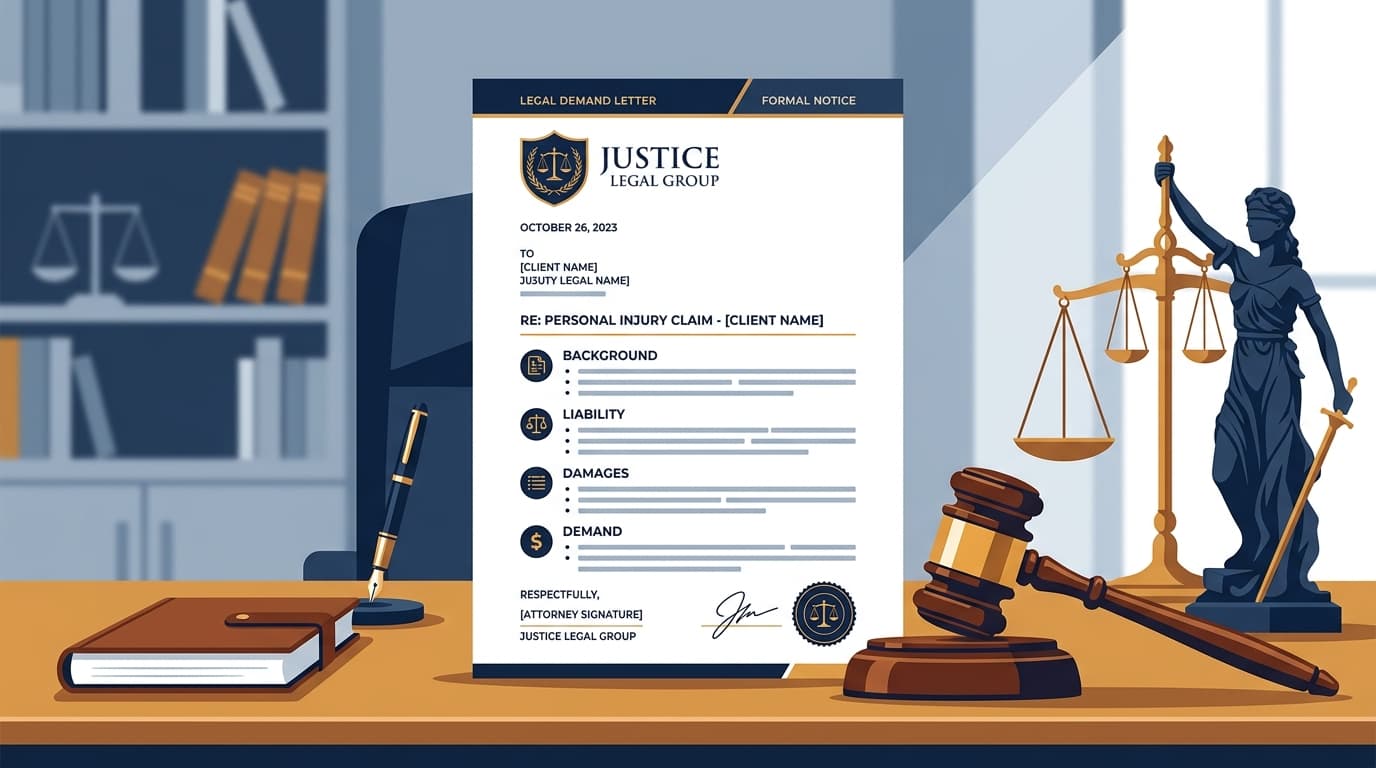
Phase 2: Demand and Negotiation (1 to 3 months after MMI). Once you reach MMI, your attorney gathers all medical records, bills, and documentation, then prepares and sends a formal demand letter. The insurance company reviews the demand, assigns a reserve, and responds with a counteroffer. Back-and-forth negotiation follows. Most straightforward cases settle during this phase.
Phase 3: Litigation and Resolution (12 to 24+ months if needed). If negotiations fail to produce a fair settlement, a lawsuit is filed. The litigation phase includes formal discovery (document production, interrogatories), depositions, and potentially mediation. Approximately 95% of California personal injury cases settle before trial — many during or after the discovery phase, when the insurance company has fully assessed its risk exposure. Understanding the deadlines and rules for filing a personal injury claim is critical because the decision to file a lawsuit must be made before the two-year statute of limitations expires.
What causes delays — and which delays actually help your case
Not all delays are bad. Some delays are the insurance company's strategy. Others are protecting your interests.
Delays that hurt you: The insurance company requesting unnecessary documentation, failing to respond to communications, or assigning new adjusters to the file mid-negotiation. These are stalling tactics designed to increase financial pressure. California's Fair Claims Settlement Practices regulations require insurers to act within specific timeframes — acknowledging claims within 15 days and deciding within 40 days of receiving proof of claim.
Delays that help you: Additional time in medical treatment that reveals the true extent of the injury. A surgeon discovering during an operation that the damage is worse than the imaging suggested. A neuropsychologist identifying cognitive deficits that were not apparent in the first few months after a TBI. These "delays" increase the documented severity of the injury — and therefore increase the settlement value.
The critical distinction is whether the delay is adding value to your claim (more documentation, more treatment, more evidence of severity) or eroding your position (running out the clock, increasing financial pressure). An experienced attorney can tell the difference and respond accordingly.
Why settling too fast is the most expensive mistake you can make
The insurance company wants speed. They want the claim resolved before the full scope of the damage is known, before the medical records are complete, and before an attorney has calculated the true value. Every day the claim stays open is a day the company's financial exposure increases.
Consider a scenario: you accept a $25,000 settlement three months after a car accident because you need the money to cover your car repair and emergency room bill. Six months later, an MRI reveals a herniated disc that requires $80,000 in spinal surgery. You signed the Release of Liability. The insurance company points to the document. Your case is closed.
The settlement process takes time because doing it right takes time. Reaching MMI, documenting every expense, calculating future costs, preparing a professional demand letter, and negotiating from a position of strength — each step builds the foundation for a settlement that actually covers the cost of the injury. For guidance specific to the Victorville area, our page on how personal injury claims are handled locally provides an overview of the local legal landscape.
This resource is independent and free to use. It is not a law firm and does not provide legal advice. For advice about your specific situation, speak with a qualified attorney.