Pedestrian Accidents in High Desert Retail Zones
Why pedestrian crashes happen in Victorville retail zones along Bear Valley Road, Amargosa Road, and Palmdale Road, and what California law says about crosswalk rights.
- By
- Victorville PI Resource Editorial Team
- Published
The retail corridors that run through Victorville — Bear Valley Road, Amargosa Road, and Palmdale Road — were designed to move cars. Wide, multi-lane intersections, high turn volumes, and sprawling parking lots all prioritize vehicle throughput. But these same corridors also draw thousands of pedestrians every day: shoppers walking to and from stores, employees crossing between parking lots and workplaces, and families navigating strip malls and the Mall of Victor Valley. The mismatch between the road design and the volume of foot traffic is what makes these areas so dangerous. This article explains the specific hazards and what California law says about pedestrian rights. It is general legal information, not legal advice.
Wide intersections and high-speed turning traffic
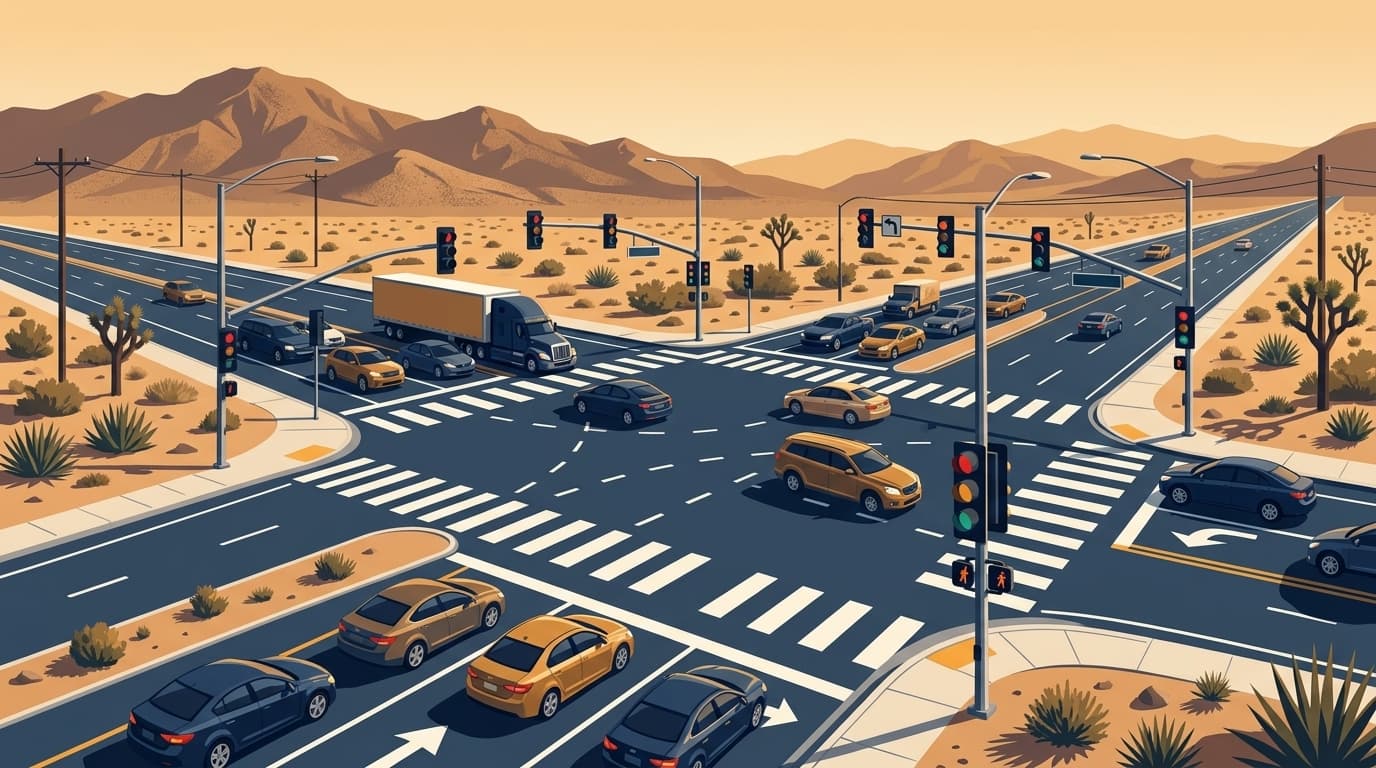
Bear Valley Road, Amargosa Road, and Palmdale Road share a common design problem: their intersections are wide enough that pedestrians must cross multiple lanes of traffic, often with limited signal time. A pedestrian who enters a crosswalk on a walk signal may still be mid-crossing when the light changes, leaving them exposed to turning vehicles that have already received a green arrow.
Left-turn and right-turn conflicts are a leading cause of pedestrian collisions at these intersections. Drivers focused on merging into traffic or clearing a turn often fail to check for pedestrians already in the crosswalk. The problem is worse during peak shopping hours, when high traffic volumes create pressure to turn quickly through narrow gaps. Intersections near major retail anchors along Bear Valley Road are particularly affected by this pattern.
Parking lot and driveway hazards
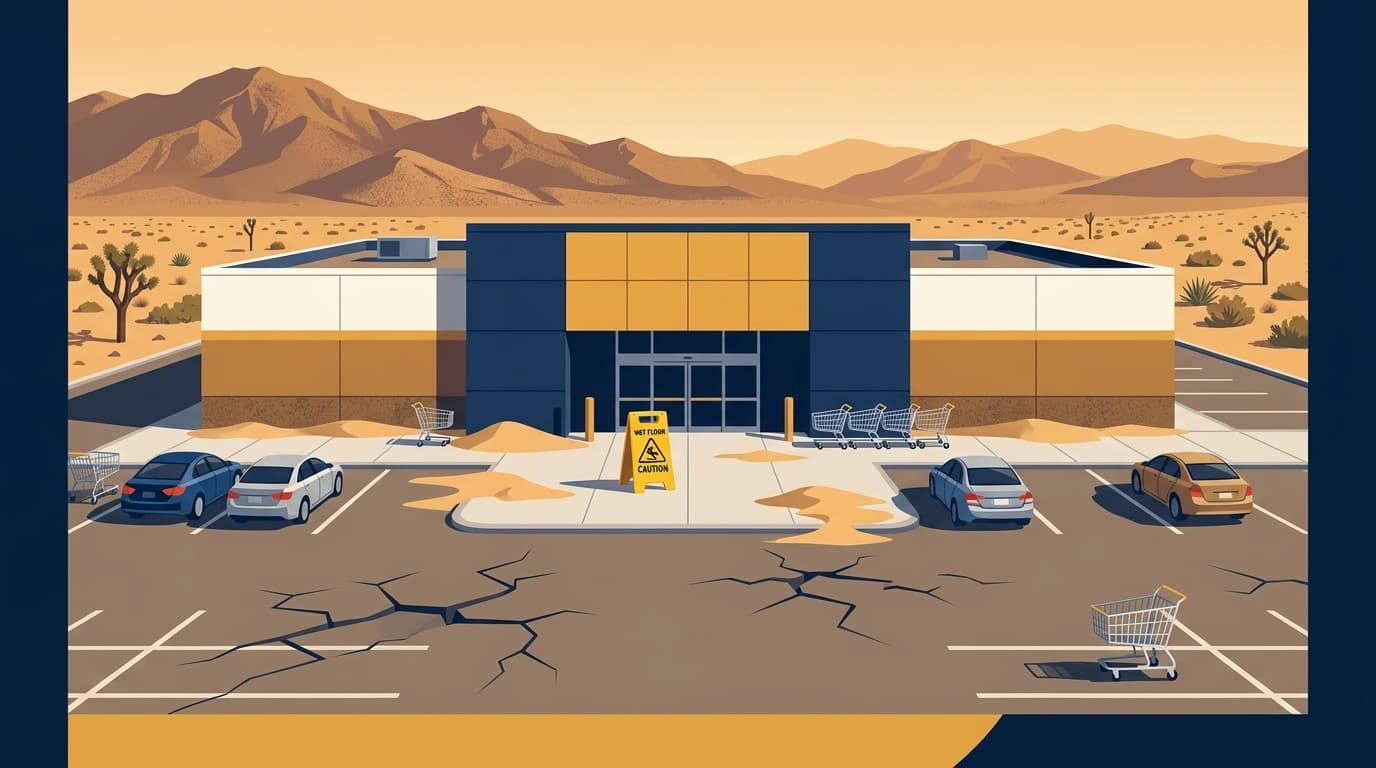
Some of the most dangerous moments for pedestrians happen outside the intersection entirely — in the parking lots and driveways that connect retail stores to the road. The same retail corridors where shoppers face slip and fall risks inside stores also present serious hazards in the surrounding parking areas.
Backing vehicles are a persistent threat. In crowded retail lots, drivers backing out of angled parking spaces have limited visibility, and pedestrians walking behind parked vehicles can be difficult to see. Near the Mall of Victor Valley and the major strip malls along Amargosa Road, the combination of high parking density and constant pedestrian movement creates frequent near-miss situations — and, too often, actual collisions.
Driveway cuts along Bear Valley Road add another layer of risk. Drivers exiting a commercial lot are often focused on finding a gap in traffic and may not look for pedestrians on the sidewalk they are crossing.
Pedestrian right-of-way in California
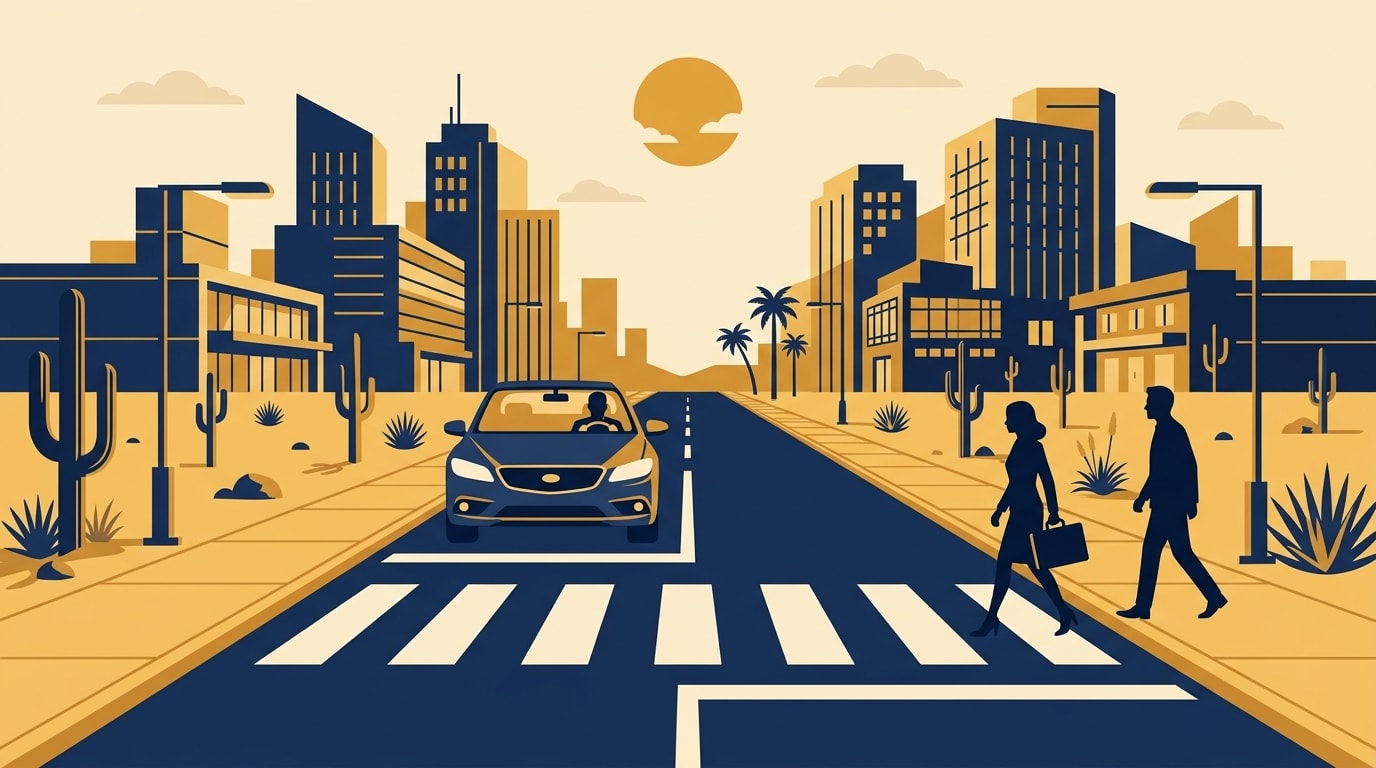
California law is clear about who has the right of way at crosswalks. Under California Vehicle Code section 21950 (opens in new tab), drivers must yield the right of way to any pedestrian in a marked or unmarked crosswalk. An unmarked crosswalk exists at every intersection where two roads meet, even if there are no painted lines — a fact that many drivers are not aware of.
The statute also requires drivers to exercise due care for the safety of any pedestrian on the roadway, regardless of whether the pedestrian is in a crosswalk. This does not mean pedestrians can cross anywhere without consequence, but it does mean that the legal burden on drivers is significant.
Why pedestrian injuries are often severe
A pedestrian has no frame, no seatbelt, and no airbag. When a vehicle traveling at even moderate speed strikes a person on foot, the injuries tend to be far more serious than in a vehicle-to-vehicle collision.
Common injury patterns in pedestrian crashes include:
- Lower extremity fractures — the bumper height of most cars and SUVs strikes at or below the knee, making leg and pelvis fractures among the most common pedestrian injuries
- Traumatic brain injuries — the secondary impact, when the pedestrian's head strikes the hood, windshield, or pavement, frequently causes concussions or more serious brain trauma
- Internal organ injuries — the force of a vehicle impact can cause internal bleeding and organ damage that may not be immediately apparent
- Spinal cord injuries — the twisting forces of a pedestrian collision can damage the spine, potentially resulting in long-term or permanent disability
Understanding how pedestrian accident claims are handled in California matters because these cases often involve serious medical costs, disputed liability at complex intersections, and insurance arguments about whether the pedestrian was in a crosswalk.
After a pedestrian crash in Victorville
If you or someone you know is struck by a vehicle, the steps taken immediately afterward can significantly affect both medical recovery and any potential claim:
- Call 911 and remain at the scene if possible. Do not assume you are uninjured — adrenaline can mask serious symptoms.
- Photograph the scene from multiple angles, including the crosswalk or intersection, the vehicle's position, traffic signals, and any visible injuries.
- Collect the driver's name, license plate, and insurance information. Note the names of any witnesses.
- Seek medical evaluation promptly. Facilities such as Desert Valley Hospital and Victor Valley Global Medical Center handle pedestrian trauma regularly, and a timely medical record linking your injuries to the crash is essential.
- Ask whether the intersection has traffic cameras or nearby business surveillance cameras — this footage can be critical evidence and is often overwritten within days.
A free consultation can help you understand your rights, especially when liability is disputed or when the intersection design itself may have contributed to the crash.
This resource is independent and free to use. It is not a law firm and does not provide legal advice. For advice about your specific situation, speak with a qualified attorney.