Motorcycle Accidents on the I-15 and Bear Valley Road
Why motorcycle crashes happen on the I-15 and Bear Valley Road in Victorville, from crosswinds and Cajon Pass congestion to left-turn collisions and lane splitting.
- By
- Victorville PI Resource Editorial Team
- Published

Victorville sits at the junction of one of the busiest freight highways in California and a network of high-traffic surface streets — a combination that makes the area uniquely hazardous for motorcycle riders. The I-15 corridor through the Cajon Pass brings highway-speed traffic, desert crosswinds, and heavy congestion, while streets like Bear Valley Road and Palmdale Road add stop-and-go commuter traffic and dangerous left-turn conflicts. This guide explains what makes these corridors so risky for riders and what California law says about common scenarios like lane splitting. It is general legal information, not legal advice.
The I-15 corridor: speed, crosswinds, and congestion
The same highway hazards that affect all motorists on the I-15 — steep Cajon Pass grades, heavy commercial truck traffic, and abrupt slowdowns — are magnified for motorcycle riders. A rider has no steel frame, no seatbelt, and no airbag. Every hazard carries more severe consequences.
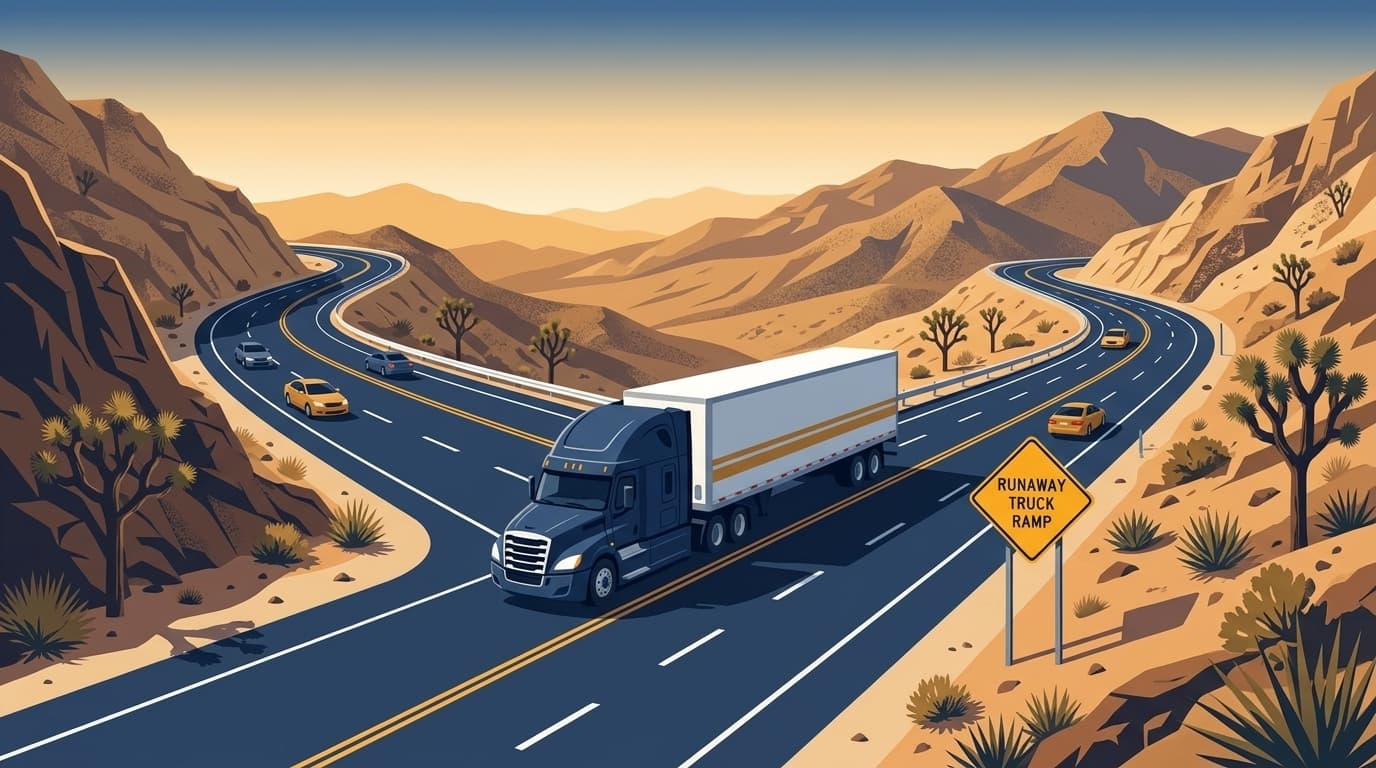
Crosswinds are a particular concern. The open desert terrain funnels strong, unpredictable gusts across the highway. A motorcycle's narrow profile and light weight make it far more susceptible to being pushed out of its lane than a car or truck. Riders descending the Cajon Pass face the added challenge of managing speed on steep grades while surrounded by heavy commercial traffic that may itself be struggling with brakes.
Bear Valley Road and Palmdale Road: surface street dangers
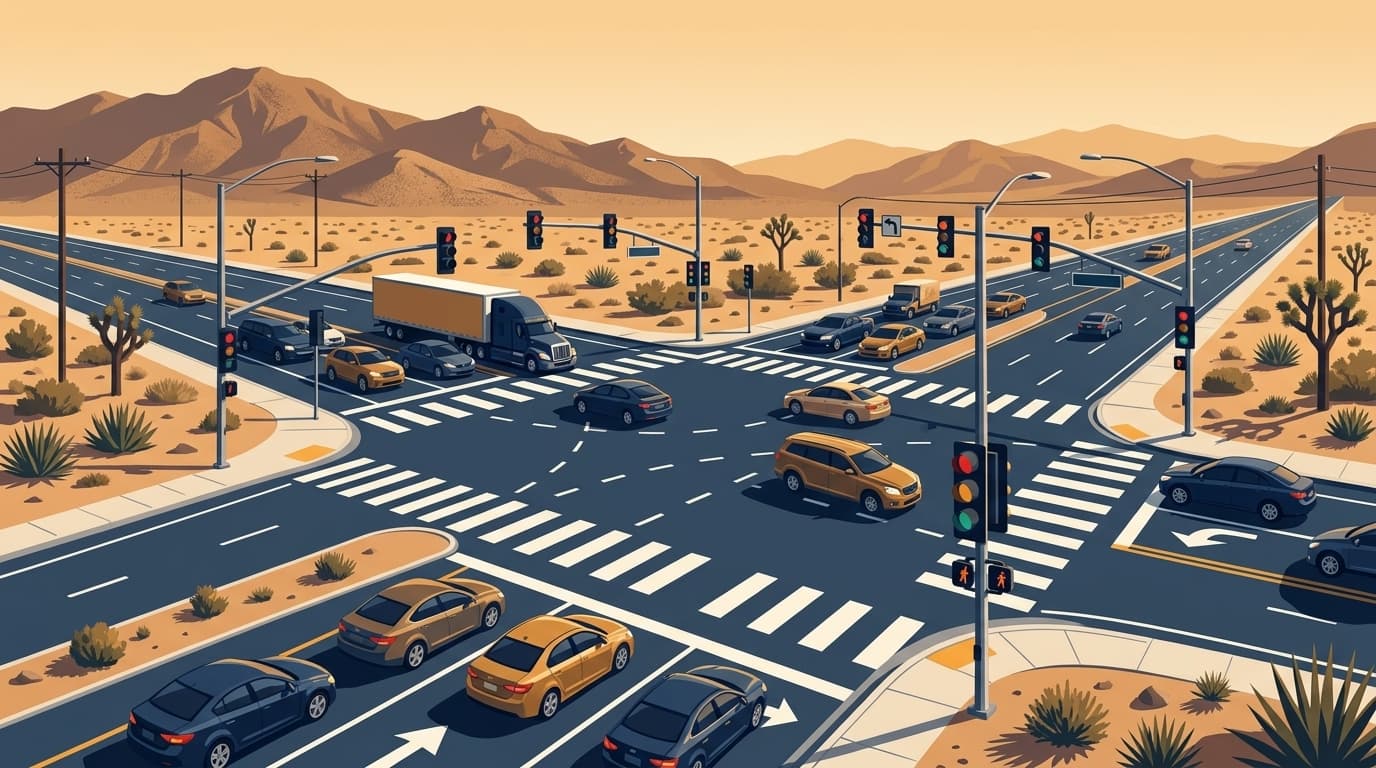
On the surface streets, the risks shift from speed to congestion. The same intersection hazards that affect all Victorville drivers — congestion near retail hubs, aggressive turns, and complex intersection geometry — are amplified for riders who have no protective frame around them.
Left-turn collisions are among the most common motorcycle crash types on these corridors. A driver turning left across oncoming traffic frequently misjudges a motorcycle's speed because of its smaller visual profile, or fails to see it altogether. Bear Valley Road's heavy volume of turning traffic near shopping centers makes this a persistent threat, and Palmdale Road's older commercial stretches add limited sight lines and frequent driveway conflicts.
Lane splitting in California
California is one of the few states where lane splitting — riding between rows of stopped or slow-moving traffic — is legal. California Vehicle Code section 21658.1 (opens in new tab) recognizes the practice but does not set strict speed limits for it.
Whether lane splitting is considered safe depends on the circumstances. The key factor is the speed differential between the motorcycle and surrounding traffic. A rider filtering through congestion at a few miles per hour faster than the cars around them faces a very different risk level than one moving through at twenty or thirty miles per hour faster. When a crash occurs during lane splitting, insurance companies will often argue that the rider was operating unsafely — even though the practice itself was legal.
Why motorcycle crashes tend to be more severe
The weight mismatch between a motorcycle and almost any other vehicle on the road is dramatic. A motorcycle and rider together typically weigh roughly 500 to 700 pounds. A midsize car weighs ten times that, and a commercial truck can weigh more than a hundred times as much. When a collision occurs, the physics are overwhelmingly against the rider.
Common injury patterns in motorcycle crashes include:
- Road rash and soft-tissue injuries from contact with pavement at speed
- Fractures — particularly to the wrists, arms, legs, and pelvis
- Traumatic brain injuries — even with a helmet, the force of impact can cause concussions or more serious brain trauma
- Spinal cord injuries that can result in long-term or permanent disability
Understanding how motorcycle accident claims are handled in California matters because these cases often involve disputed fault, significant medical costs, and insurance arguments about rider behavior.
After a motorcycle crash in Victorville
If you are involved in a crash, protecting yourself and your potential claim starts immediately:
- Move to safety if you can, and call 911.
- Document the scene — photograph vehicle positions, road conditions, your injuries, and any helmet damage.
- Get the other driver's insurance information and note the names of any witnesses.
- Seek medical evaluation promptly. Facilities such as Victor Valley Global Medical Center and Desert Valley Hospital handle trauma cases regularly, and a timely medical record connecting your injuries to the crash is essential evidence.
- Be cautious about recorded statements to the other driver's insurance company before you understand your rights.
A free consultation can help you understand whether the facts of your crash support a claim — especially in lane-splitting or disputed-fault situations where the legal analysis can be complex.
This resource is independent and free to use. It is not a law firm and does not provide legal advice. For advice about your specific situation, speak with a qualified attorney.