Do I Have to Give a Recorded Statement to the Other Insurance Company?
Why you have zero legal obligation to give a recorded statement to the at-fault driver's insurance in California: first-party vs. third-party claims, two-party consent, and what to say instead.
- By
- Victorville PI Resource Editorial Team
- Published
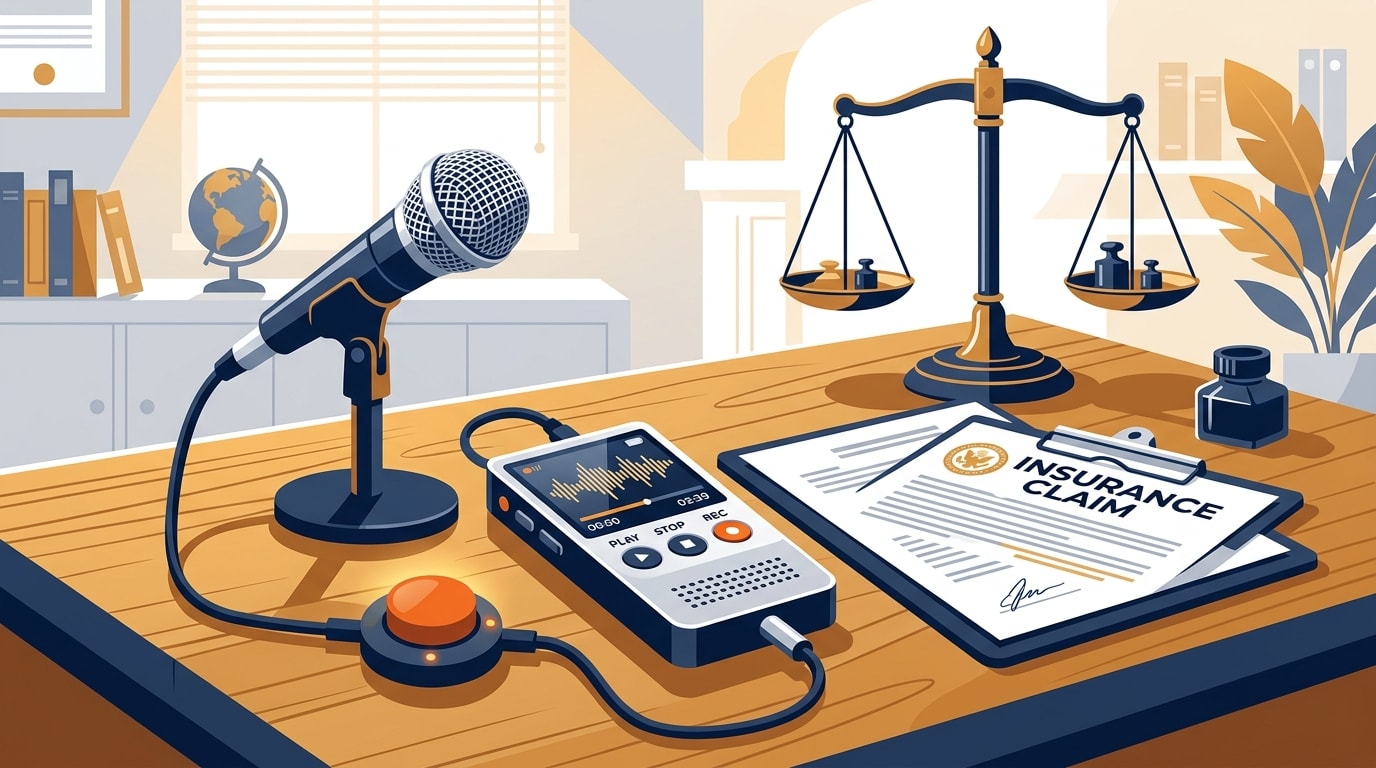
Your phone rings. The caller identifies themselves as an adjuster from the other driver's insurance company. They sound friendly, professional, even concerned about your wellbeing. Then they say: "I just need to get a quick recorded statement from you so we can process your claim." It sounds routine. It sounds mandatory. It is neither. Understanding the difference between your obligations to your own insurance company and your obligations to the at-fault driver's insurance company is one of the most critical distinctions in personal injury law — and getting it wrong can cost you thousands of dollars. This guide is general legal information, not legal advice.
The difference between your insurance and the other driver's insurance
This distinction is the foundation of everything that follows, and it is the one that insurance adjusters deliberately blur.
A first-party claim is a claim you file with your own insurance company. You have a contract with your insurer — your policy. That contract may include a "duty to cooperate" clause that requires you to provide reasonable information when you file a claim under your own coverage (collision, MedPay, or uninsured motorist).
A third-party claim is a claim you file against the at-fault driver's insurance company. You have no contract with that company. You have no policy with them. You owe them nothing. There is no contractual relationship, no cooperation clause, and no legal mechanism that requires you to speak with them at all — let alone on the record.
The adjuster calling you from the other driver's insurance company is a representative of a corporation that has a direct financial interest in paying you as little as possible. They are not a neutral party. They are not your advocate. And they are not someone you are obligated to help.
Why you have zero legal obligation to speak to the at-fault driver's insurer
Under California law, you are not legally required to provide a recorded statement to the at-fault driver's insurance company. Period. The adjuster cannot deny your claim solely because you refused to go on the record. They cannot penalize you for exercising this right.
The adjuster may imply otherwise. They may say the statement is "required to process your claim" or that "we can't move forward without it." These statements are designed to create a sense of urgency and obligation where none exists. The adjuster wants the recording because it is the single most effective tool they have for reducing your settlement.
California is also a two-party consent state under Penal Code § 632 (opens in new tab). This means the adjuster must inform you that the call is being recorded and obtain your consent before recording begins. If they fail to disclose the recording, it is a violation of California law. You have every right to decline consent.
How adjusters turn innocent statements into admissions of fault
The purpose of a recorded statement is not to document the facts of the accident. The adjuster already has the police report. The purpose is to get you to say something — anything — that can be reframed as an admission of comparative fault or a minimization of your injuries.
"Were you feeling okay right after the accident?" If you say yes — because adrenaline was masking your pain — the adjuster notes that you were "feeling fine at the scene." Three weeks later, when you report chronic back pain, the insurer argues that your injuries were not caused by the accident because you admitted you felt fine immediately afterward.
"Did you see the other car before the impact?" If you say yes, the adjuster argues you could have taken evasive action and therefore share fault for the collision. If you say no, the adjuster argues you were not paying attention. Every answer is a trap. For a detailed breakdown of how insurance adjusters use these tactics to reduce your settlement, our guide exposes the full playbook.
"I'm sorry this happened to you" / "I'm sorry too." Even a reflexive expression of sympathy — "I'm sorry this happened" — can be reframed as an apology that implies responsibility. In a recorded format, context is stripped away and only the words remain.
When you may need to cooperate with your own insurance company
The rules change when you are filing a claim with your own insurance company. Your auto policy likely contains a cooperation clause that requires you to provide reasonable information when you file a claim under your own coverage — MedPay, collision, or uninsured/underinsured motorist.
This does not mean you must give a recorded statement without preparation. It means you should cooperate reasonably with your own insurer's investigation. However, "cooperate" does not mean "surrender your rights." You can — and should — consult with an attorney before providing any statement, even to your own company.
If your own insurer requests a statement, you can ask for the questions in advance, prepare your responses, and have legal counsel present during the conversation. Understanding the deadlines and rules for filing a personal injury claim is important because the cooperation requirement does not override your right to take reasonable time to prepare.
What to say when the other driver's adjuster calls you
When the at-fault driver's insurance company calls, you do not need to be confrontational. You can be polite and firm.
Provide only basic identifying information: your name, your contact information, and the date of the accident. You are not required to discuss the details of the collision, your injuries, your medical treatment, or your pain levels.
Decline the recorded statement directly: "I am not comfortable providing a recorded statement at this time. Please put any questions in writing, or you can contact my attorney." This is a complete, legally sound response. You do not need to explain further or justify your decision.
Do not apologize, speculate, or minimize. Do not say "I think I'm fine" or "it wasn't that bad" or "I'm not sure what happened." Each of these phrases has been used by adjusters to reduce settlements.
The most effective protection is legal representation. Once a Victorville personal injury lawyer enters the picture, the insurance company is legally required to direct all communication through your attorney. The recorded statement request disappears entirely — and the adjuster loses their most powerful tool.
This resource is independent and free to use. It is not a law firm and does not provide legal advice. For advice about your specific situation, speak with a qualified attorney.