What to Do When the Insurance Company Denies Your Claim in California
What to do when your California insurance claim is denied: the difference between legitimate denials and bad faith tactics, common adjuster excuses, and your legal options.
- By
- Victorville PI Resource Editorial Team
- Published
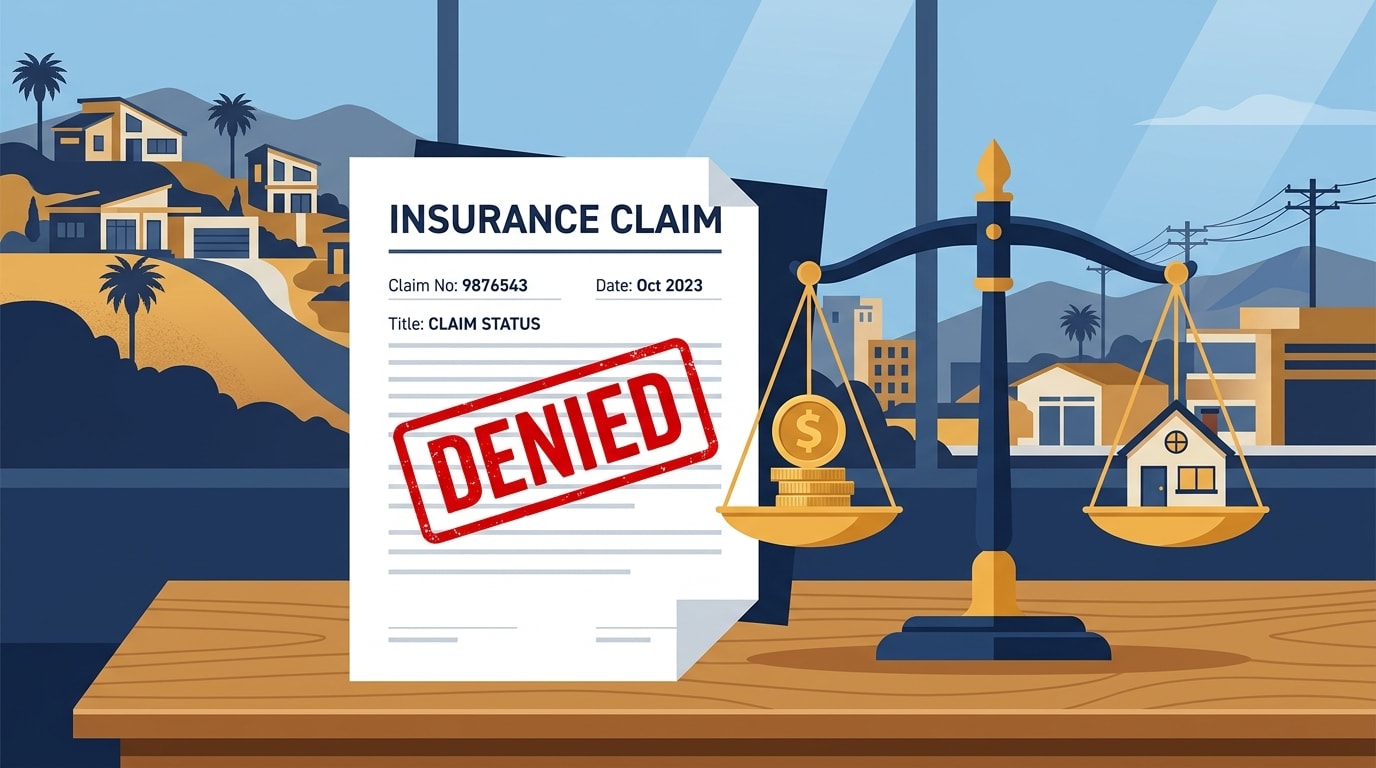
Receiving a formal denial letter from an insurance company is one of the most stressful moments in a personal injury claim. After weeks or months of medical treatment, documentation, and waiting, the letter arrives — and it says no. Many victims assume this means their case is over, that some legal authority has ruled against them. That assumption is wrong. A denial letter is the insurance company's opening negotiation position, not a final legal ruling. This guide explains what a denial actually means and what you can do about it. It is general legal information, not legal advice.
Why a denial letter is not the end of your claim
An insurance company's denial letter carries no legal weight beyond the company's own internal decision. It is not a court order. It is not a ruling by a judge. It is a letter from a for-profit corporation whose financial incentive is to pay as little as possible on every claim it receives.
The adjuster who signed that letter made a business calculation, not a legal determination. They evaluated whether you were likely to accept the denial and walk away — or whether you would challenge it. The vast majority of claimants who receive a denial never respond, never appeal, and never consult an attorney. The insurance company is counting on that outcome.
When a denied claim is challenged — whether through an internal appeal, a complaint to the California Department of Insurance (opens in new tab), or legal representation — the insurer is forced to re-evaluate its position. The risk calculation changes entirely when the company faces potential bad faith liability for unreasonably denying a valid claim.
The most common reasons insurance companies deny California injury claims
Insurance adjusters rely on a predictable set of justifications when denying personal injury claims. Understanding these excuses is the first step toward dismantling them.
"Your injuries are pre-existing." This is the most frequently used denial tactic. The adjuster reviews medical records and identifies any prior complaint — a back issue from five years ago, a knee problem from a decade earlier — and argues that the current pain is simply a continuation of that old condition, not a result of the accident. What this argument ignores is that California law recognizes the eggshell plaintiff doctrine: the at-fault party takes the victim as they find them. If a pre-existing condition was aggravated or worsened by the accident, the insurer is liable for that aggravation.
"You waited too long to seek treatment." Adjusters argue that a gap between the accident and the first medical visit proves the injuries were not caused by the collision. In reality, many serious injuries — particularly soft tissue injuries, concussions, and internal bleeding — have delayed symptom onset. Adrenaline masks pain at the scene, and symptoms may not become apparent for days or weeks.
"The police report says you were at fault." Police reports are not legal determinations of fault. Officers arrive after the collision and document what they observe and what parties tell them. Reports frequently contain errors, omit critical details, or reflect the officer's initial impression rather than a thorough investigation. A police report can be challenged with medical evidence, witness testimony, and accident reconstruction analysis.
Legitimate denials vs. bad faith denial tactics
Not every denial is bad faith. Some denials are legitimate — the policy may have lapsed, the claim may fall outside the coverage terms, or the evidence may genuinely not support the claim. Understanding the difference between a legitimate denial and a bad faith tactic is critical.
A legitimate denial is one where the insurer has conducted a thorough, objective investigation and determined — based on the evidence and the policy language — that the claim is not covered. The denial letter will cite specific policy provisions and provide a clear explanation of the decision.
A bad faith denial occurs when the insurer denies a valid claim without conducting a reasonable investigation, ignores evidence that supports the claim, misrepresents the policy language, or uses delay tactics to pressure the claimant into abandoning the claim. Under California law, insurers owe a duty of good faith and fair dealing to claimants. Violating this duty exposes the company to additional damages including emotional distress, attorney fees under the Brandt Rule, and in egregious cases, punitive damages.
The steps you should take immediately after receiving a denial
Do not accept the denial as final. The first and most important step is to understand that you have options. Doing nothing is exactly what the insurance company wants.
Review the denial letter carefully. The letter is required to state the specific reasons for the denial and cite the policy provisions relied upon. If the reasons are vague, unsupported, or based on incorrect facts, the denial may be challengeable. Understanding the deadlines and rules for filing a personal injury claim in California is essential because the statute of limitations continues to run even while you are dealing with the denial.
Gather your documentation. Compile all medical records, bills, accident reports, photographs, witness statements, and correspondence with the insurance company. This evidence forms the foundation of any appeal or legal challenge. For context on what your claim may actually be worth, our guide on what determines the average personal injury settlement in California explains the formula that should have been applied to your case.
File a complaint with the California Department of Insurance. The CDI can investigate the insurer's conduct and compel them to justify their decision. While the CDI cannot force a settlement, a formal complaint creates a paper trail and puts regulatory pressure on the company.
How legal representation changes the insurer's risk calculation
The single most significant factor that changes an insurance company's behavior is the involvement of an attorney. When a claim is represented by a Victorville personal injury lawyer, the adjuster's internal risk calculation shifts dramatically.
An unrepresented claimant who receives a denial letter is statistically unlikely to challenge it. A represented claimant has an advocate who will file an appeal, submit a formal demand, and — if necessary — file a lawsuit. The insurer knows this. The presence of legal counsel tells the company that the cost of maintaining the denial now includes the risk of litigation, the risk of a bad faith finding, and the risk of damages that far exceed the original claim value.
This is why insurers frequently reverse denials and offer settlements after an attorney enters the picture. The denial was never about the merits of the claim — it was about the company's assessment of whether the claimant would fight back.
This resource is independent and free to use. It is not a law firm and does not provide legal advice. For advice about your specific situation, speak with a qualified attorney.